
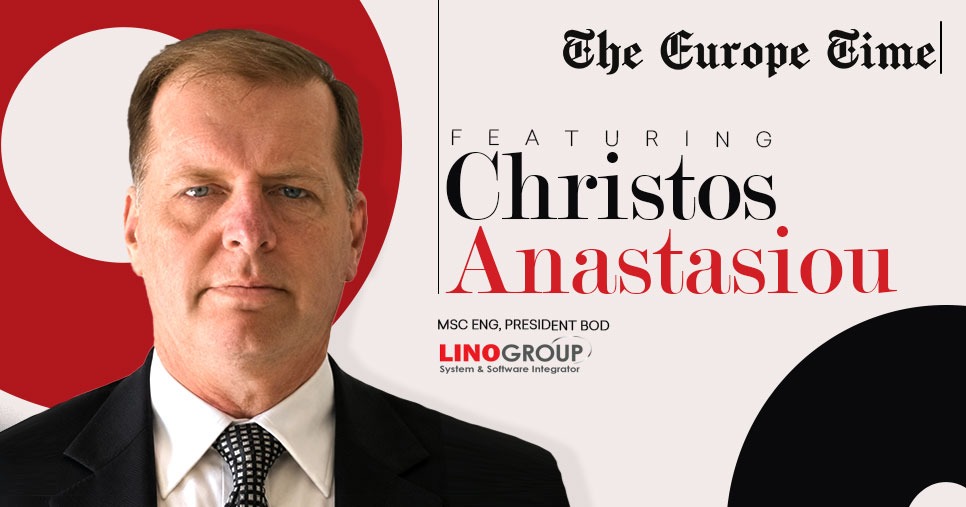
Christos Anastasiou Interview
Christos Anastasiou, Chairman of the Group Board of LinoGroup, leads one of Greece’s fastest-growing diversified business groups, with an annual turnover of approximately €75 million and business activities spanning printing systems integration, 2D and 3D printing, tourism services, software development, renewable energy, and professional education.
Established in 1997, LinoGroup has evolved from its origins in the printing industry into an international business group with an extensive portfolio of companies, brands, and strategic partnerships. Today, its operations and business relationships extend across Greece, Cyprus, Turkey, Romania, Bulgaria, Israel, Serbia, and other international markets, supported by a network of local partners and specialized teams.
Guided by the philosophy “If you can DREAM IT, you can DO IT,” the Group combines established industry expertise with an entrepreneurial approach to emerging technologies and new business opportunities. Its activities include advanced printing technologies, customized travel solutions for corporate clients and organizations, innovative travel technology, engineering solutions in renewable energy, and specialized professional education.
For Mr. Anastasiou, business growth is closely connected to curiosity, adaptability, and a willingness to look beyond traditional ways of working. From the evolution of printing to the potential of additive manufacturing, digital platforms, and sustainable energy, his leadership reflects a broader ambition to help businesses recognize new opportunities, adopt relevant technologies, and create lasting value for customers.
Building a Diversified Business Group
The Europe Time: LinoGroup operates across several sectors, including printing, tourism, software, energy, and professional training. How do you bring these different businesses together under one vision?
Christos: For me, the starting point is having a genuine interest in what we do and being willing to keep learning. Every industry has its own challenges, customers, and ways of working, so I do not believe that one approach can simply be applied everywhere. Each business needs to understand its market and develop the expertise required to serve its customers well.
The expertise is something that grows with the right life partners, family and friends as close as family members, whom we have in every section. On this, I believe that we are lucky at LinoGroup.
At the same time, there are important values that connect our activities. We want to understand what is changing in the market, explore new technologies, and find practical ways to help our customers. That mindset is relevant whether we are working with printing equipment, 3D printing solutions, travel technology, software, or renewable energy.
Our Group has developed through a combination of organic growth, strategic acquisitions, international expansion, and the creation of new business activities. What began in 1997 with the establishment of Linomedia S.A. has gradually expanded into a diversified organization with specialized companies operating in different sectors.
Today, our five principal areas of activity bring together printing systems integration, 2D and 3D technologies, tourism services, software development, green energy, and professional education. Each business has its own identity and expertise, but they share a common philosophy of innovation, customer commitment, and continuous development.
Diversification has also taught us the importance of surrounding ourselves with people who understand their fields and are willing to take responsibility. A group can only develop successfully when its individual businesses have the knowledge and commitment to move forward.
I see growth as an ongoing process. We need to remain open to new ideas, build strong relationships, and continue improving what we offer. That is how we can develop our businesses while staying focused on the people and customers who make them successful.
From a Printing Company to an International Business Group
The Europe Time: LinoGroup has an impressive history of development, from its establishment in 1997 to its current international presence. Which milestones have been particularly important in shaping the Group?
Christos: Our history is closely connected to our willingness to recognize opportunities and take calculated steps towards new markets and technologies.
We started in 1997 with the establishment of Linomedia S.A., building our foundations in the printing industry. In 2003, we expanded into Turkey through Linomedia AS, followed by further expansion into Balkan countries through local partners in 2004. These developments helped us understand the importance of international relationships and building a presence beyond our original market.
In 2009, Linomedia S.A. was restructured into Lino S.A., marking another important stage in the Group’s development. We subsequently expanded into Israel in 2010 through Lino Israel Ltd.
The establishment of Ask2Travel S.A. in 2011 represented a significant step towards diversification into tourism and travel services. We also acquired Ahead RM S.A. in 2013, while our activities in Turkey continued to develop through the opening of an Ask2Travel office in 2012.
Another important milestone came in 2015, when Ask2Travel opened a branch in Heraklion and Yachts Sailing was established. In 2016, we entered the expanding field of 3D printing technologies through 3D-XLENCE.
Our tourism activities continued to grow with the integration of the TopNotch Travellers brand into Ask2Travel in 2017. In 2018, we established KRV2, further developing the Group’s business portfolio.
In 2020, we moved into our own premises and offices on Syngrou Avenue, with more than 1,000 square metres of space. Ask2Travel subsequently opened a branch office in Thessaloniki in 2022.
The establishment of ARKIAS ACADEMY in 2023 reflected our growing interest in professional education and the development of specialized skills. In 2024, we secured the representation of STRATASYS for LINO, strengthening our position in advanced 3D printing technologies. More recently, in 2025, the Grecia Go brand was integrated into Ask2Travel’s business activities.
Every milestone represents an opportunity to learn, develop new capabilities, and create additional value for our customers. Looking back, I believe that our ability to adapt and recognize opportunities has been one of the most important factors behind our development.
The Future of 3D Printing
The Europe Time: 3D printing is becoming increasingly important across manufacturing and product development. Where do you see its greatest opportunities, and how could it change the way businesses operate?
Christos: I believe 3D printing has the potential to change many aspects of the global economy because it gives businesses new ways to think about how products are designed and manufactured. It is not simply another piece of equipment. It can influence the entire process, from the first idea and prototype to the production of a finished component.
One of its most important advantages is flexibility. Traditional manufacturing methods can involve significant preparation, tooling, and production constraints. Depending on the application, 3D printing can make it easier to produce complex shapes, test designs, create customized parts, and develop prototypes more quickly.
These possibilities are relevant to industries that need specialized components or want to reduce the time between an idea and a practical product. They can also create opportunities for businesses that previously found certain types of manufacturing too costly or complicated.
At LinoGroup, our activities in this sector are developed through Lino and 3D-XLENCE, with our focus on advanced printing technologies and the integration of innovative solutions. Our representation of STRATASYS further strengthens our involvement in this field.
However, adopting 3D printing successfully requires more than purchasing a machine. Companies need to understand the materials, software, production processes, and applications that make sense for their operations. They also need people who can work confidently with the technology.
Our interest is in helping customers understand these possibilities and identify where 3D printing can deliver real value. I believe the future belongs to businesses that can combine technological capabilities with practical knowledge and a clear understanding of their customers’ needs.
The technology will continue to evolve, and I believe the companies that take the time to understand it today will be better prepared for the opportunities ahead.
Growing Through International Partnerships
The Europe Time: LinoGroup has developed business activities and partnerships across several international markets. What have you learned about expanding internationally while maintaining strong customer relationships?
Christos: International growth begins with understanding the market you want to enter. It is important to recognize that customer expectations, business practices, and competitive conditions can differ considerably from one country to another. What works well in one market may need to be adapted in another.
It is a great value for the companies of our Group to have access to a multiple-size market, which makes our investments in cutting-edge technologies more secure.
Our network of business activities and partnerships extends across Greece, Cyprus, Turkey, Romania, Bulgaria, Israel, Serbia, and beyond. This international presence has allowed us to develop relationships with different markets while gaining a better understanding of their specific requirements.
Partnerships are particularly important in this process. Working with experienced local partners helps a business understand its customers, respond to market requirements, and develop relationships that would take time to build independently. A strong partnership should be based on trust, clear communication, and a shared commitment to delivering value.
Our activities across printing, technology, tourism, and other sectors have reinforced the importance of staying close to customers. Technology and products matter, but customers also want reliable support, knowledgeable people, and partners who understand their business challenges.
International expansion should therefore be approached with both ambition and patience. It is not only about entering more markets. It is about building relationships that can support long-term growth and maintaining the quality of service that customers expect.
I believe that staying curious, listening carefully, and being willing to learn from different markets are essential qualities for any business that wants to grow internationally.
Sustainability and Renewable Energy
The Europe Time: Sustainability has become an important consideration for businesses across industries. How does renewable energy fit into LinoGroup’s wider business strategy?
Christos: Sustainability is becoming an increasingly important part of how businesses plan for the future. Companies need to think not only about their immediate commercial objectives but also about how their operations affect resources, communities, and the environment.
Renewable energy is an important area of opportunity because it connects technological progress with practical business needs. Engineering excellence in renewable energy can contribute to the development of cleaner energy capacity while creating opportunities for investment and long-term planning.
For us, having activities in this area reflects an interest in understanding where technology and changing market needs can create meaningful opportunities. As with any business activity, it is important to approach projects with the right expertise, careful planning, and a clear understanding of their long-term requirements.
I also believe sustainability should be considered as part of everyday business decisions rather than treated as a separate subject. Organizations can look at how they use resources, how they develop their capabilities, and how they make responsible decisions for the future.
The energy transition will continue to create challenges as well as opportunities. Businesses that understand the changing landscape and approach it thoughtfully can play a constructive role in this transition while developing new areas of activity.
Digital Transformation and Travel Technology
The Europe Time: Digital platforms are changing how businesses manage operations and serve customers. How do software and travel technology contribute to LinoGroup’s approach to innovation?
Christos: Digital technology has changed the way businesses connect with customers, organize information, and deliver services. In travel, for example, customers expect access to a wide range of options, while travel professionals need systems that help them manage bookings and work efficiently with different suppliers.
Our activities in tourism and travel technology reflect the importance of making these processes more connected and accessible. Through Ask2Travel, we provide customized travel solutions to corporate clients, organizations, and shipping companies. Our approach is based on understanding the specific needs of each client and developing services that respond to their operational and travel requirements.
At the same time, Entrada represents our investment in innovative technology for the travel industry. Through this platform, the Group provides access to a broad network of travel services, including hotels, airlines, transfers, and car rental options, serving more than 500 travel agencies and corporate organizations.
The aim is to give travel businesses tools that can help them manage a complex range of services through a more integrated digital environment.
Our tourism portfolio also includes specialized travel brands such as TopNotch Travellers, Yachts Sailing, and Grecia Go. These activities allow us to address different customer segments and develop travel experiences with a more specialized approach.
More broadly, I believe that software creates the greatest value when it solves a real problem. Technology should make work easier, improve access to information, or help businesses respond more effectively to their customers. Introducing a digital system simply because it is new does not guarantee a better result.
Successful digital transformation also depends on people. Teams need to understand the tools they use and how those tools support their work. Businesses must remain focused on the customer experience while improving the systems behind it.
As technology continues to develop, we will keep looking for opportunities to connect expertise with practical digital solutions. The objective is not change for its own sake, but better ways of working and stronger value for customers.
Innovation Through Experience and Continuous Learning
The Europe Time: LinoGroup’s activities range from established printing technologies to newer areas such as 3D printing and digital platforms. How do you encourage innovation while maintaining the strengths of an established business?
Christos: I think innovation begins with a willingness to look beyond what you already know. Experience is extremely valuable because it helps you understand customers, recognize risks, and make informed decisions. But experience should not become a reason to stop exploring new possibilities.
The printing industry is a good example of how much a sector can change over time. Technology, customer expectations, and production methods continue to evolve. Businesses must be prepared to understand these developments and decide how they can respond.
At the same time, not every new technology will be right for every company. It is important to look carefully at the practical application, the investment required, and the benefits that customers can expect. Innovation should be connected to a clear purpose.
I also believe people need opportunities to develop their knowledge. New technologies require new skills, and organizations must be prepared to invest in learning and professional development. This helps teams build confidence and makes it easier for a business to adapt when conditions change.
This is also why professional education has become an important part of our Group’s activities. Through ARKIAS ACADEMY, we aim to empower professionals through targeted education, supporting the development of knowledge and skills that respond to professional and business requirements.
For me, the balance is straightforward: respect the experience that brought the business to where it is today, but remain curious about what could make it better tomorrow. That combination can help a company continue to grow without losing sight of its core strengths.
People, Expertise and Corporate Culture
The Europe Time: As LinoGroup continues to develop across different industries, what role do people, corporate culture, and professional development play in achieving long-term success?
Christos: A business may have a strong strategy and access to excellent technology, but it still depends on people to turn those advantages into results. Their knowledge, commitment, and ability to work together make a real difference to the quality of the products and services a company provides.
Our corporate culture reflects the values, beliefs, behaviours, communication style, and organizational structure that guide the Group. These elements create consistency across our companies and are shared by management and employees alike.
Our values, which are rooted in the philosophy of our founders, form the basis of everything we do. One of our most important priorities is building trust with customers, suppliers, employees, and local communities. Trust is not something that can be established through words alone. It is developed through consistent actions, responsibility, and the quality of our relationships.
Today, the Group has 97 employees in Greece, with women representing 57% of our workforce and men 43%. These figures reflect the importance we place on building a professional environment that brings together different experiences, skills, and perspectives.
We also recognize the importance of continuous learning. Our employees participate in more than 800 hours of training, reflecting our commitment to developing professional capabilities and helping our teams remain prepared for changing market requirements.
Our people bring an average of 14.8 years of professional work experience, while the average length of employment within the company is 7.2 years. Furthermore, 37% of our employees hold a master’s degree.
These figures are important, but what matters most is the knowledge, commitment, and cooperation behind them. This becomes particularly important in a diversified group because the skills needed in one business may be very different from those required in another.
Professional development gives employees opportunities to strengthen their skills, understand new tools, and contribute more confidently to their teams. It also helps the business build the capabilities it needs for the future.
I believe leaders have a responsibility to create an environment where people can learn, share ideas, and take ownership of their work. This requires clear expectations, communication, and a willingness to listen.
Growth should not be measured only by the size of a business or the number of markets it reaches. It should also be reflected in the strength of its teams, the relationships it builds, and the quality of the work it delivers. These are important foundations for sustainable progress.
A Long-Term Vision for Business Growth
The Europe Time: LinoGroup has grown into a business group with an annual turnover of approximately €75 million and activities across multiple countries. What advice would you give to business leaders who want to innovate, expand into new markets, and build companies that remain successful over time?
Christos: My advice would be to stay curious and never assume that the way you have always done something is necessarily the best way to do it in the future. Markets change, technology develops, and customers’ needs evolve. Businesses need to pay attention to these changes and be willing to learn.
At the same time, leaders should be careful about pursuing every new opportunity. It is important to understand the market, assess the investment, and consider whether a new direction fits the company’s capabilities and long-term objectives. Ambition is valuable, but it needs to be supported by good decisions and consistent execution.
I would also emphasize the importance of people and partnerships. No business develops successfully on its own. Strong teams, trusted partners, and lasting customer relationships help an organization respond to challenges and take advantage of opportunities.
Finally, I believe leaders should enjoy the process of discovering new possibilities. That interest encourages people to ask questions, explore different approaches, and keep improving. It is particularly important in industries where technology continues to change the way work is done.
Our philosophy, “If you can DREAM IT, you can DO IT,” reflects this way of thinking. It is about having the confidence to imagine new possibilities while also being prepared to work hard, develop the necessary expertise, and turn ideas into practical achievements.
For me, building a successful business is about combining experience with an open mind. You need to respect what you have learned, remain willing to adapt, and focus on creating something useful for your customers. If you can do that consistently, you give the business a stronger foundation for the future.
Christos Anastasiou concluded that curiosity, customer focus, trusted partnerships, continuous learning, and a willingness to adapt remain central to LinoGroup’s approach to business development. From its beginnings in the printing industry in 1997 to its current position as a diversified international group, LinoGroup’s journey demonstrates how experience, entrepreneurial thinking, and investment in new technologies can create opportunities for sustainable growth.
About LinoGroup
Established in 1997, LinoGroup is one of Greece’s fastest-growing business groups, with an annual turnover of approximately €75 million. Its activities encompass printing systems integration, 2D and 3D printing technologies, tourism services, software development, green energy, and professional education.
Through its network of companies, brands, and international partners, the Group operates in Greece, Cyprus, Turkey, Romania, Bulgaria, Israel, Serbia, and other markets.
Its portfolio includes Lino, Lino 3D, 3D-XLENCE, Ask2Travel, TopNotch Travellers, Yachts Sailing, KRV2, ARKIAS ACADEMY, and Entrada, bringing together specialized expertise across different industries.
With 97 employees in Greece, more than 800 annual hours of staff training, and a strong commitment to professional development, LinoGroup continues to invest in its people, technological capabilities, and international partnerships.
Connect with Christos Anastasiou on LinkedIn.
For more information, visit LinoGroup’s website or explore LinoGroup on LinkedIn.
Also Read:-
Igor Drakulić: Driving Tourism and Community Growth in Slovenia
Salvatore Sollo explores GreenGasPower, biomethane
Frank van der Sant: Driving Growth and Business Transformation