
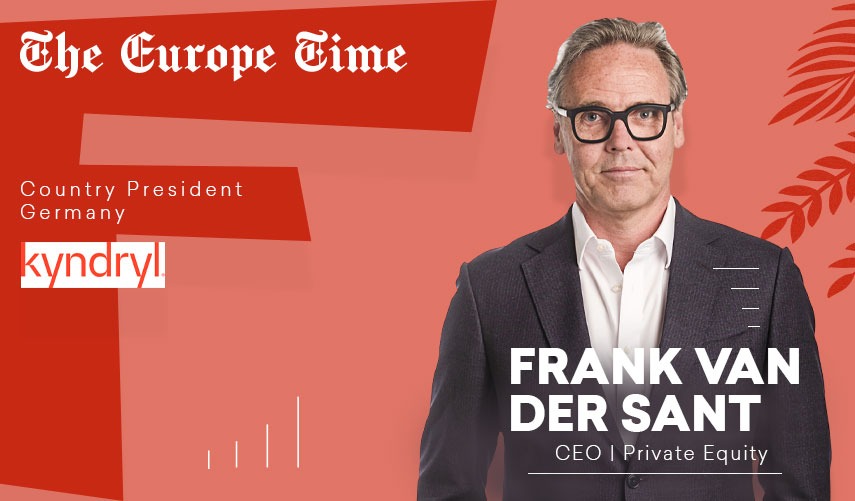
Frank van der Sant Interview
Frank van der Sant is an experienced business leader with approximately 25 years of international leadership experience across technology services, urban mobility, and private equity-backed organizations. As Country President Germany at Kyndryl, he brings extensive experience in business transformation, commercial strategy, profit and loss (P&L) management, and operational performance. Previously, he held senior leadership positions at APCOA, Atos, and Siemens, where he focused on profitable growth, strategic sales, customer relationships, and the development of new business opportunities. His leadership approach combines analytical thinking, commercial discipline, and a strong commitment to empowering people and building high-performing teams.
Leadership across Industries and Cultures
We started the interview by asking, “You have built a career across several industries and international organizations. How have these experiences shaped your approach to leadership?”
Frank van der Sant replied, “Working across different industries and international organizations has taught me that successful leadership requires both adaptability and consistency. Every business has its own market dynamics, customer expectations, and operational challenges, but the fundamentals of leadership remain remarkably similar. You need a clear strategy, a strong understanding of the business, and people who are motivated to deliver results.
My experience at Siemens and Atos gave me valuable exposure to global technology services, strategic sales, and complex customer relationships. At APCOA, I worked in a different operating environment, with direct responsibility for commercial performance, profitability, and business transformation. These experiences helped me develop a practical leadership style that combines financial discipline with an understanding of people and customers.
I believe leaders must be willing to challenge established ways of working while giving their teams the confidence and support to implement change. Ultimately, leadership is about creating the conditions in which people can perform at their best and the business can achieve sustainable results.”
Leading in an Evolving Technology Landscape
The Europe Time: As Country President Germany at Kyndryl, what priorities are most important when leading a business in a rapidly changing technology environment?
Frank van der Sant replied, “Leading a business in a changing technology environment requires a strong focus on customers, execution, and the ability to adapt. Technology continues to influence how organizations operate, manage complexity, and respond to changing market conditions. For a technology services business, understanding these customer needs and translating them into relevant solutions is essential.
My experience has reinforced the importance of connecting commercial strategy with operational delivery. Growth is valuable, but it must be supported by strong customer relationships, reliable execution, and a business model that creates value over time. Leaders also need to ensure that their organizations can respond to new opportunities without losing focus on their existing commitments.
At Kyndryl, I bring experience from large-scale international businesses, commercial leadership, and transformation programs. My approach is to understand the business and its customers, establish clear priorities, and work with teams to translate strategy into measurable outcomes. Strong collaboration and accountability are important in making that happen.”
Balancing Revenue Growth
The Europe Time: What did you learn from managing a €1 billion P&L at APCOA, and how do you balance revenue growth with profitability?
Frank van der Sant replied, “Managing a business of that scale requires a detailed understanding of how commercial decisions influence financial performance. Revenue growth is only one part of the equation. Pricing, customer retention, product mix, operational efficiency, and the cost of delivering services all contribute to the quality of business performance.
At APCOA, I was responsible for commercial activities across a large organization and worked closely with colleagues to improve profitability and strengthen the company’s commercial capabilities. During my tenure, the business achieved record financial results in 2024. Over eight years, EBITDA and margins doubled, while the company’s value increased by more than 300%, according to the results achieved during that period.
One important lesson is that profitable growth rarely comes from a single initiative. It usually results from consistent execution across several areas, including better pricing decisions, stronger customer relationships, disciplined cost management, and the development of new revenue streams.
Leaders must understand the financial impact of their decisions and ensure that growth is sustainable. This means looking beyond short-term revenue targets and focusing on the overall health and long-term competitiveness of the business.”
Leading through Challenging Business Periods
The Europe Time: You served as Interim CEO of APCOA in 2024. What did that experience teach you about leading an organization through a demanding business period?
Frank van der Sant replied, “Serving as Interim CEO gave me the opportunity to take responsibility for the overall business during an important period. It required a broad perspective, because decisions had to consider financial performance, customers, employees, and the organization’s long-term priorities at the same time.
We delivered record-breaking financial results in 2024 while maintaining strong employee engagement despite challenging market conditions. That experience reinforced my belief that business performance and employee engagement should not be treated as separate objectives. A business needs clear goals and high expectations, but people also need to understand the direction, feel involved, and have the support required to deliver.
During demanding periods, communication becomes particularly important. Teams need clarity about priorities and confidence that decisions are being made for sound reasons. Leaders must also be prepared to make difficult decisions and take responsibility for the outcomes.
For me, effective executive leadership is about maintaining focus without losing sight of the people responsible for delivering the results.”
Driving Value Creation in Private Equity
The Europe Time: You have spent nine years working in private equity-backed businesses. What drives value creation in a private equity environment?
Frank van der Sant replied, “Private equity environments place a strong emphasis on measurable performance, strategic focus, and the effective use of resources. There is a clear expectation that leadership teams understand where value can be created and translate that understanding into practical initiatives.
In my experience, sustainable value creation involves several connected priorities: growing the business, improving margins, strengthening commercial execution, and identifying opportunities to develop new revenue streams. It also requires a willingness to examine existing operations and make changes where the business can perform more effectively.
At APCOA, I helped drive consistent double-digit growth in new business, expand the commercial pipeline, and develop new business lines. These included electric vehicle charging and urban hubs, which grew to contribute more than 10% of total EBITDA. The new business lines also achieved a profitability level approximately 500 basis points above that of legacy operations.
These results demonstrate the importance of looking beyond established business models. New opportunities can create significant value when they address genuine customer needs and are supported by the right commercial and operational capabilities.”
Transforming Businesses
The Europe Time: How do you approach business transformation while maintaining operational stability and customer satisfaction?
Frank van der Sant replied, “Business transformation is most effective when it addresses real operational or commercial challenges rather than change for its own sake. Before introducing new processes or technologies, leaders need to understand how the business currently operates, where inefficiencies exist, and what customers and employees need.
At APCOA, I worked on initiatives that strengthened commercial excellence, including CRM deployment, marketing-led lead generation, customer relationship development, portfolio optimization, and revenue and product management. The objective was to improve how the organization identified opportunities, served customers, and converted commercial activity into financial results.
Transformation also depends on adoption. A new system or process will not deliver its intended value if people do not understand why it matters or how to use it effectively. Communication, training, accountability, and feedback are therefore essential.
I prefer a practical approach: establish the business objective, define how success will be measured, involve the people responsible for execution, and monitor progress. This allows organizations to improve performance while remaining attentive to customer commitments and day-to-day operations.”
Building Customer Relationships
The Europe Time: How important are customer relationships and commercial excellence in achieving long-term business growth?
Frank van der Sant replied, “Customer relationships are fundamental to sustainable business growth. Winning a new customer is important, but retaining that customer, understanding changing requirements, and identifying ways to deliver additional value are equally significant.
Commercial excellence means building a structured approach to the entire customer relationship. This includes understanding the market, identifying the right prospects, managing the sales pipeline, developing effective pricing strategies, and ensuring that the services delivered meet customer expectations.
At APCOA, I focused on strengthening both business-to-business relationships and the consumer experience. We worked on improving lead generation, customer loyalty, revenue management, and product development. These activities need to work together rather than operate as separate functions.
I also believe that commercial teams must remain closely connected to operational teams. The promises made during the sales process have to be supported by effective delivery. When organizations align customer expectations with operational capabilities, they are better positioned to build trust, protect margins, and develop long-term relationships.”
Leading High-Performing International Teams
The Europe Time: Your career includes leadership responsibilities across multiple countries and cultures. What makes an international leadership team effective?
Frank van der Sant replied, “International leadership requires an understanding that people may approach communication, decision-making, and collaboration differently depending on their professional and cultural backgrounds. A leader needs to recognize these differences without allowing them to become barriers to effective teamwork.
My experience working across European and international organizations has taught me the importance of clarity. Teams should understand the business objectives, their individual responsibilities, and the standards expected of them. At the same time, leaders should create enough space for local teams to contribute their knowledge and respond to the specific needs of their markets.
I would describe my leadership style as authentic, practical, and people-focused. I believe in communicating directly, listening carefully, and treating people with respect, including when difficult messages need to be delivered. Emotional intelligence is particularly important when an organization is undergoing change or working through complex decisions.
High-performing teams are built on trust, accountability, and a shared understanding of what success looks like. These principles are relevant regardless of geography or industry.”
Strategic Advice for Sustainable Business Growth
Lastly we asked, “What advice would you give to executives who want to lead business transformation and deliver sustainable growth?”
“My advice would be to develop a strong understanding of the business before deciding what needs to change. Leaders need to understand the financials, the customers, the market, and the people who make the organization work. Without that foundation, it is difficult to distinguish between problems that require immediate action and opportunities that need a longer-term commitment.
Second, connect strategy to execution. A business transformation plan should lead to clear priorities, defined responsibilities, and measurable outcomes. It is not enough to communicate an ambitious vision; the organization must be able to translate that vision into daily decisions and actions.
Third, invest in people. Sustainable performance depends on teams that understand their objectives, feel trusted to make decisions, and are willing to take responsibility for results. Leaders should challenge people to improve while giving them the support they need to succeed.
Finally, remain open to learning. Markets change, customer expectations evolve, and strategies sometimes need to be adjusted. The strongest leaders combine confidence in their direction with the willingness to question their assumptions and respond to new information.
For me, successful leadership means building an organization that can consistently deliver results, adapt to change, and create value for customers, employees, and stakeholders over the long term.” Frank van der Sant concluded
Connect Frank van der Sant on LinkedIn
For more information visit Kyndryl
Also Read:-
Victor Rogachev: Building Smarter B2B Growth Through AI
Dragana Kevkic Named Europe Onboarding Director at MISpayway
How Satyanarayana Gopisetty Is Supporting Enterprise Innovation