
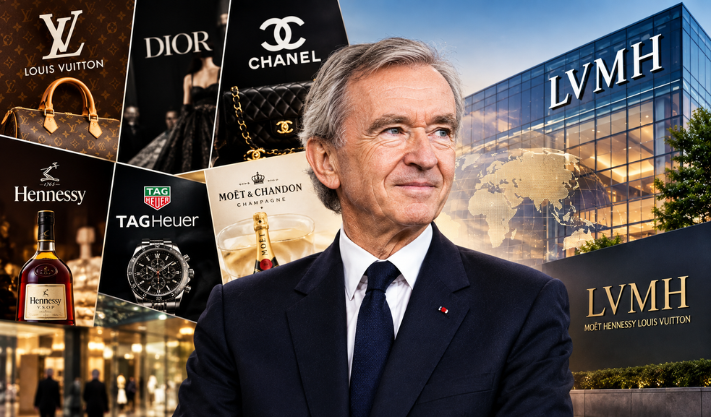
How Did Bernard Arnault Build the LVMH Luxury Empire?
Bernard Arnault is one of the most influential figures in the global luxury business. Since 1989, he has served as Chairman and CEO of LVMH, helping develop the group into a global luxury powerhouse with businesses spanning fashion and leather goods, wines and spirits, perfumes and cosmetics, watches and jewellery, selective retailing, hospitality, and other activities.
But how did Bernard Arnault build the LVMH luxury empire? His strategy combined strategic acquisitions, long-term investment, strong brand management, operational discipline, international expansion, quality craftsmanship, and a business model that allows individual luxury brands to preserve their identities.
Who Is Bernard Arnault?
Bernard Arnault was born in Roubaix, France, in 1949. He graduated from the École Polytechnique and began his professional career as an engineer at Ferret-Savinel, a French construction company.
He later moved into executive management and became chairman of the company in 1978. His career took a major turn in 1984 when he became involved with Financière Agache.
Arnault reorganised the company and made Christian Dior an important part of his strategy for building a luxury-focused business. This experience became an important foundation for his later leadership at LVMH.
How Did Bernard Arnault Get Involved With LVMH?
LVMH was created in 1987 through the merger of Moët Hennessy and Louis Vuitton. In 1989, Bernard Arnault became the group’s majority shareholder and took the position of Chairman and CEO.
Rather than treating LVMH as a single traditional consumer brand, Arnault developed it as a group of distinctive luxury houses.
This structure allowed individual brands to benefit from the resources, expertise, distribution capabilities, and international scale of a larger organisation while maintaining their own identities.
This became one of the defining features of the LVMH business model.
What Was Bernard Arnault’s Core Business Strategy?
One of Bernard Arnault’s central strategies was to build a portfolio of strong luxury brands.
Acquisitions became an important part of LVMH’s growth strategy. Instead of relying on one major brand, the group expanded by bringing established luxury businesses into its portfolio and providing them with resources to grow.
The strategy created a diversified luxury business with brands operating across different categories and markets.
This portfolio approach also helped LVMH reduce its dependence on a single product category or individual brand.
Why Did Brand Identity Matter to Bernard Arnault?
Brand identity is particularly important in the luxury industry because heritage, craftsmanship, creativity, exclusivity, and reputation can influence how consumers perceive a brand.
Bernard Arnault’s approach was not to make every LVMH brand operate in exactly the same way. Instead, the group focused on developing individual Maisons while respecting their history, identity, and expertise.
Louis Vuitton, Christian Dior, Fendi, Bulgari, and other LVMH brands have their own histories, product categories, creative identities, and customer bases.
This model allows LVMH to combine corporate scale with individual brand positioning.
How Did Acquisitions Help Build the LVMH Luxury Empire?
Acquisitions became one of the key tools used to expand the LVMH luxury portfolio.
During the 1990s, LVMH expanded its portfolio with brands such as Loewe and Celine and strengthened its presence in watches and jewellery through acquisitions including TAG Heuer.
Over time, the group expanded beyond fashion and leather goods into watches and jewellery, wines and spirits, perfumes and cosmetics, selective retailing, hospitality, and other luxury activities.
This strategy gave LVMH access to different customer segments and markets while creating a broader luxury ecosystem.
How Did Bernard Arnault Expand LVMH Globally?
International expansion was another important part of LVMH’s growth.
Luxury demand exists across major markets around the world, and LVMH developed retail, distribution, manufacturing, and other operations internationally.
The group expanded its presence across Europe, North America, Asia, and other global markets. International locations, stores, production facilities, and distribution networks helped its brands reach consumers beyond their original European markets.
Global expansion also allowed LVMH’s luxury houses to benefit from growing demand in different regions.
What Role Did Quality and Craftsmanship Play in LVMH’s Success?
Quality and craftsmanship are at the heart of the luxury business model.
LVMH places significant emphasis on product quality, craftsmanship, materials, creativity, and customer experience. The group also focuses on controlling important parts of the value chain, from sourcing materials and manufacturing to distribution and retail.
For luxury brands, craftsmanship can be a major part of perceived value.
Maintaining high standards across products and customer experiences helps individual brands protect their positioning and strengthen their long-term reputation.
How Did Bernard Arnault Balance Heritage With Growth?
One of the biggest challenges in the luxury industry is expanding a brand without weakening the characteristics that make it distinctive.
Bernard Arnault’s approach was to give individual LVMH Maisons access to the resources of a global group while allowing them to maintain their own identities.
LVMH’s decentralised organisational model encourages individual responsibility, entrepreneurship, and initiative.
In practice, this means LVMH can provide financial, operational, technological, and international support while individual brands continue to develop their own creative direction and heritage.
How Important Is Creativity to LVMH?
Creativity is a major component of LVMH’s luxury strategy.
Luxury brands need to preserve their heritage while remaining relevant to new generations of consumers. This requires continuous innovation in products, advertising, retail experiences, digital communication, collaborations, and brand storytelling.
LVMH places importance on excellence, creativity, craftsmanship, and entrepreneurial spirit.
The combination of heritage and innovation helps its luxury houses remain relevant as consumer preferences and global markets change.
Where Does Christian Dior Fit Into Bernard Arnault’s Story?
Christian Dior is particularly important to understanding Bernard Arnault’s business career.
In the 1980s, Arnault reorganised Financière Agache and made Christian Dior a central part of the organisation.
Dior later became one of the most important luxury names within the broader Arnault business structure.
The Dior story also illustrates an important part of Arnault’s strategy: investing in an established luxury brand, strengthening its business foundation, protecting its heritage, and developing its international potential.
How Has LVMH Diversified Beyond Fashion?
Although fashion and leather goods are among LVMH’s most visible businesses, the group is much more diversified.
LVMH operates across several major luxury categories, including:
- Fashion and leather goods
- Wines and spirits
- Perfumes and cosmetics
- Watches and jewellery
- Selective retailing
- Hospitality
- Other luxury-related activities
This diversification means LVMH is not dependent on one particular product segment.
It also allows the group to connect with luxury consumers through different products, services, retail formats, and experiences.
What Is Bernard Arnault’s Leadership Style?
Bernard Arnault’s leadership at LVMH has focused heavily on long-term brand development.
Instead of pursuing short-term uniformity across all businesses, the LVMH model gives individual Maisons considerable responsibility for developing their own identity and expertise.
This approach is particularly relevant to luxury because building a strong brand reputation can take many years.
Long-term investment in craftsmanship, creativity, employees, products, retail networks, and customer relationships has therefore been an important part of the group’s development.
What Can Entrepreneurs Learn From Bernard Arnault’s Business Strategy?
Bernard Arnault’s career offers several business lessons that entrepreneurs can apply to their own companies.
Build Strong Brands
A strong brand can become a valuable long-term business asset. Entrepreneurs should focus on creating clear positioning, consistent quality, and a recognisable identity.
Think Long Term
Successful luxury businesses often require continuous investment in products, people, craftsmanship, marketing, and reputation.
Use Acquisitions Strategically
Acquiring established companies can provide access to customers, expertise, products, distribution networks, and new markets.
Protect Individual Brand Identity
A large organisation does not necessarily need to eliminate the individuality of its brands. Different businesses can maintain separate identities while benefiting from shared resources.
Expand Internationally
Entering international markets can increase a company’s potential customer base and create new growth opportunities.
Invest in Quality
Consistent quality can support premium positioning and help build long-term customer trust.
Is Bernard Arnault Still Running LVMH?
Yes. Bernard Arnault remains Chairman and CEO of LVMH and is also the group’s principal shareholder.
LVMH continues to operate through a broad portfolio of luxury houses across multiple categories and international markets.
His continued leadership keeps the focus on the long-term development of the group’s individual Maisons and global luxury businesses.
What Is the Secret Behind Bernard Arnault’s LVMH Success?
There is no single factor behind Bernard Arnault’s success with LVMH. His approach has involved several interconnected strategies, including strategic acquisitions, long-term investment, global expansion, brand development, craftsmanship, quality, diversification, and protection of individual brand identities.
LVMH was created in 1987 through the merger of Moët Hennessy and Louis Vuitton. Arnault became the group’s majority shareholder and Chairman and CEO in 1989 and developed a portfolio-based approach that brought numerous luxury houses together under one organisation.
The result is a global luxury group operating across major luxury categories and international markets.
For entrepreneurs and business leaders, the broader lesson from Bernard Arnault and LVMH is that building a large company does not necessarily require creating one giant brand. The LVMH model demonstrates how multiple distinctive brands can operate under one corporate structure while maintaining their own heritage, identity, creativity, and market positioning.
Final Takeaway
Bernard Arnault built the LVMH luxury empire by combining acquisitions, brand management, international expansion, long-term investment, craftsmanship, diversification, and entrepreneurial leadership.
His strategy was not simply to make LVMH bigger. It was to build a portfolio of powerful luxury houses and give each brand the opportunity to develop its own identity while benefiting from the scale of a global organisation.
That combination of global scale and individual brand identity remains one of the defining features of the LVMH business model.
Also Read:-
How Can You Buy Property in Germany?
How to Invest in Russia and Start a Business?
What Is the Role of Technology in Business Growth in Spain?