
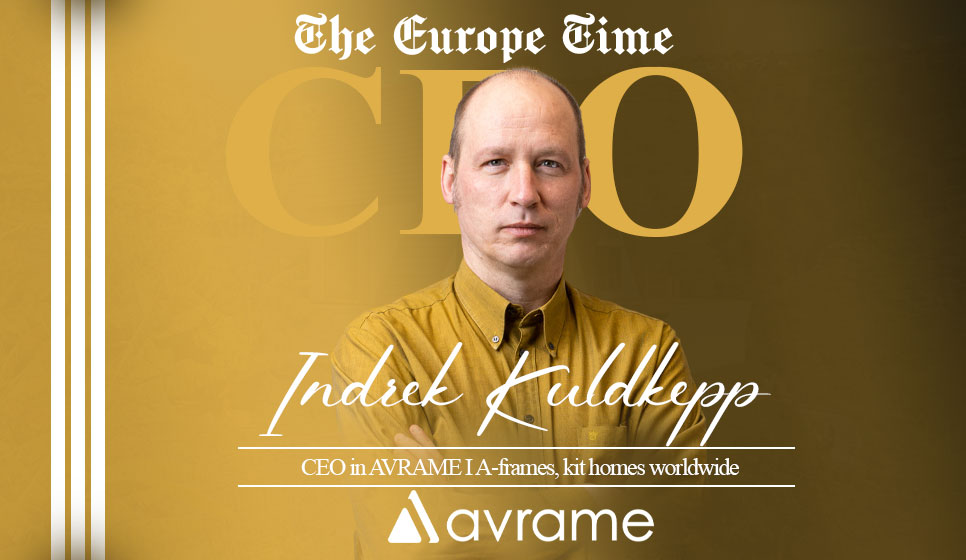
Indrek Kuldkepp Interview
Indrek Kuldkepp is the CEO and founder of AVRAME, a globally recognized company redefining contemporary living through thoughtfully engineered A-frame homes. With over 25 years of experience in the timber building industry, Kuldkepp blends craftsmanship, engineering, and philosophy to create houses that prioritize freedom, simplicity, and logic over excess. From off-grid living in the forests of Estonia to delivering modular A-frame kits in more than 30 countries, his work reflects a clear belief: architecture should serve people, not control them. Through AVRAME, he empowers individuals to build energy-efficient, adaptable homes that offer independence, clarity, and a deeper connection to nature.
From Craft to Conscious Architecture
We started the interview by asking, “Indrek, your journey spans over 25 years in the timber building industry. How did those early years shape the way you think about architecture today?”
Indrek Kuldkepp replied, “I started very practically, as a carpenter, working with my hands and learning how buildings actually behave over time. That experience grounded me. You understand quickly that architecture is not about images or trends it’s about gravity, weather, materials, and people. Timber, in particular, taught me humility. Wood is honest; it reacts if you disrespect it. Those early years shaped my belief that a good building should be simple, logical, and forgiving. Even today, when we design globally distributed A-frame kits, the foundation is still that same hands-on understanding of how things are built, used, and lived in.”
Avrame as an Act of Liberation
The Europe Time: You’ve said that founding Avrame in 2016 was not a traditional business decision, but a “liberation.” What did you mean by that?
Indrek Kuldkepp replied, “At that point in my life, I had realized that I was not truly free. I had built a conventional house, carried debt, and worked partly for the bank rather than for myself. After a personal turning point, I sold that house and decided never to repeat that mistake. Avrame was born from that realization. It wasn’t about creating a company it was about enabling freedom. Freedom from unnecessary debt, from oversized houses, and from systems that control how and where people live. Avrame exists to give people tools, not obligations.”
Reimagining the A-Frame Legac
The Europe Time: The A-frame design is often seen as a trend today. Why did you choose to revive this architectural form?
Indrek Kuldkepp replied, “The A-frame is not a trend it’s a rediscovery. It became popular in the 1960s because it’s structurally efficient and visually honest. Later, it disappeared mainly due to poor insulation and energy inefficiency. I saw an opportunity to reinterpret it using modern engineering and materials. The form itself is logical: steep roofs shed snow, the structure is strong, and construction is straightforward. For me, the A-frame represents architectural reduction removing everything unnecessary while keeping what truly works.”
A Global Model Built on Simplicity
The Europe Time: Avrame homes are now present in more than 30 countries. What makes this model work globally?
Indrek Kuldkepp replied, “We don’t sell finished houses we sell freedom of choice. Our kits are precisely engineered, but they are adaptable to local conditions, regulations, and lifestyles. Whether someone builds in Canada, Spain, or on a remote island, the core logic remains the same. The structure is made of graded wood, and the interior walls are non-load-bearing, which allows people to design spaces that suit their lives. That flexibility, combined with technical simplicity, makes the concept universal.”
Technology with Restraint
The Europe Time: You are cautious about smart-home technology, even though Estonia is known for digital innovation. Why is that?
Indrek Kuldkepp replied, “Technology should serve people, not enslave them. I have nothing against digital tools, but I don’t believe in over-engineering everyday life. If a system requires constant updates, apps, or external support, it’s fragile. I don’t want a call on Christmas Eve because a digital lock failed somewhere on the other side of the world. A wood stove works every time. You light it, and it gets warm no software required. That reliability is essential, especially in remote or off-grid living.”
Off-Grid Living as a Design Principle
The Europe Time: You personally live off-grid, without connection to public utilities. How does that lifestyle influence Avrame’s design philosophy?
Indrek Kuldkepp replied, “Living off-grid teaches you what truly matters. When there’s no backup system, everything must work reliably and efficiently. That’s why Avrame houses are energy-efficient, winter-ready, and technically straightforward. I wanted a home that functions even when everything else fails no dependency on fluctuating energy prices or complex infrastructure. That experience reinforces our core idea: a house should demand little from its owner and give a lot in return.”
Architecture as Responsibility, Not Status
Lastly we asked, “How do you personally define “good architecture,” especially in today’s world of excess and overdesign?”
“Good architecture has to be functional before it is aesthetic. A house is a tool, not a status symbol. It should serve the people who live in it, not impress strangers. Many people build too large and then spend their lives maintaining rooms they never use. That’s not reasonable, and it’s not freedom. A good building offers clarity, warmth, and independence. It gives people space to live their lives, not manage their possessions. If a house does that, it has done its job.” Indrek Kuldkepp concluded
Connect with Indrek Kuldkepp on LinkedIn
For more information visit Avrame
Also Read
Cindy Murray: Meets Modern Insurance Leadership
The Vision and Work of Dr. Pranay Misra
Michel Wichman on Success, Responsibility