
Special feature by The Europe Time
Europe is entering one of the most complex economic and political periods in its modern history. Business leaders are navigating geopolitical tensions, rapid digital transformation, artificial intelligence, financial volatility, and a growing demand for sustainable growth models. In this environment, conventional leadership frameworks are being challenged, creating space for new ideas that combine strategic thinking with adaptability.
One of the voices contributing to this conversation is Aldin Celovic, Senior Researcher and Specialist within the Horizon Europe consortium, whose latest manuscript explores how leaders can overcome uncertainty, strategic setbacks, and institutional paralysis through an innovative concept known as the Leadership Cycle.
Originally developed as an academic manuscript under JEL classification F47, focusing on macroeconomic aspects of international trade, forecasting, and applied models, the study offers a practical roadmap for executives, researchers, and policymakers seeking to lead effectively in a world increasingly shaped by disruption.
Far from being a traditional management paper, Celovic’s work examines how leaders can develop resilience, rethink decision making, and transform periods of instability into opportunities for growth.
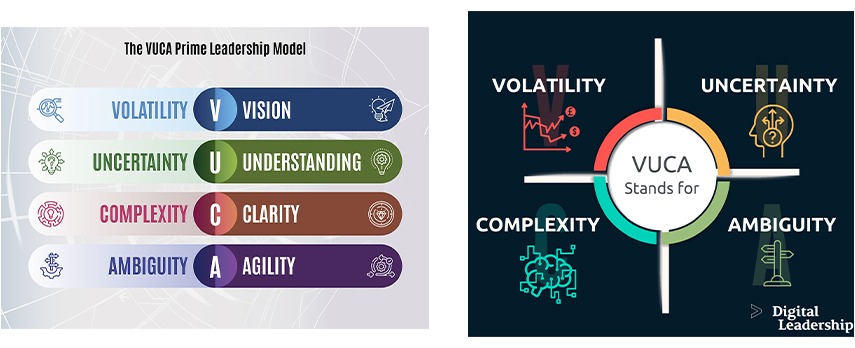
Digital leadership VUCA World Disruptive Leadership Institute
Beyond Traditional Leadership Models
For decades, leadership theory has been dominated by familiar concepts such as transformational, democratic, transactional, and charismatic leadership. While these approaches remain influential, Celovic argues that modern crises require something fundamentally different.
His research focuses on the limitations of existing frameworks when organizations face prolonged uncertainty and rapidly changing market conditions. From supply chain disruptions to technological revolutions, today’s leaders operate in an environment where established rules are constantly being rewritten.
At the heart of his research lies the Leadership Cycle, a continuous process built around three essential dimensions: analysis, intervention, and perspective.
The process begins with careful assessment. Leaders must understand not only the visible challenges before them but also the hidden forces shaping events. Once the situation has been diagnosed, interventions can be introduced and tested. The final stage involves stepping back to evaluate the consequences of those actions before beginning the cycle once again.
According to Celovic, leadership is not defined by certainty or authority. It is defined by the ability to continuously learn, adjust, and move forward despite ambiguity.
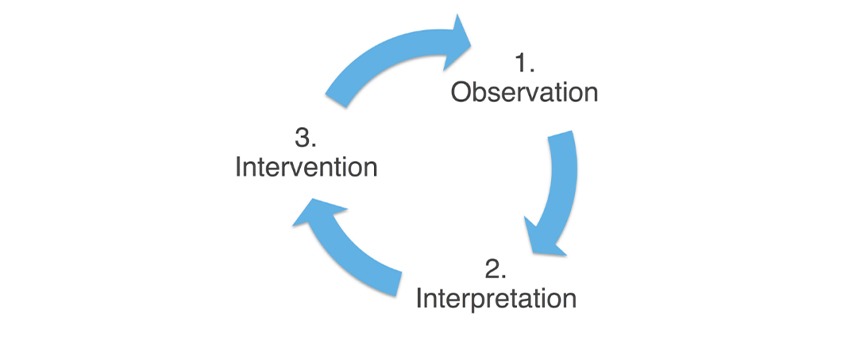
Iterative decision-making as a practice of adaptive leadership
The Balcony Effect: Seeing Beyond Immediate Challenges
Among the manuscript’s most compelling contributions is the concept of the “balcony perspective.” Inspired by contemporary adaptive leadership theories, this approach encourages executives to temporarily step away from operational pressures and observe their organizations from a broader vantage point.
From the balcony, leaders can identify long term patterns, detect organizational blind spots, and better understand the relationships that influence decision making. Rather than reacting impulsively to crises, they gain the ability to recognize structural weaknesses and hidden opportunities.
This perspective is particularly relevant across Europe, where businesses must balance economic competitiveness with regulatory complexity, sustainability targets, and technological innovation.
Research and insights on adaptive leadership and executive transformation are increasingly being explored by institutions such as Harvard Business Review and Warwick Business School, reflecting the growing importance of flexible leadership models in international business.
Leadership in a Volatile European Economy
The manuscript arrives at a moment when uncertainty has become a defining characteristic of global markets. Political developments, inflationary pressures, artificial intelligence, and shifting investment patterns are forcing executives to reconsider how leadership is practiced.
Celovic argues that future leaders will require a combination of skills rarely found within a single framework. Strategic vision alone is no longer sufficient. Emotional intelligence, resilience, creativity, and the capacity for rapid adaptation have become equally important.
His research highlights several qualities that will shape the next generation of European leadership:
Leaders must communicate openly, even when definitive answers do not exist.
Organizations need cultures that encourage experimentation and learning.
Executives must cultivate resilience and maintain stability during periods of intense pressure.
Innovation should be viewed not as a separate initiative, but as a core leadership responsibility.
Long term purpose must guide decisions in an increasingly unpredictable world.
For Celovic, uncertainty is not simply an obstacle to overcome. It is an environment that demands entirely new forms of thinking.
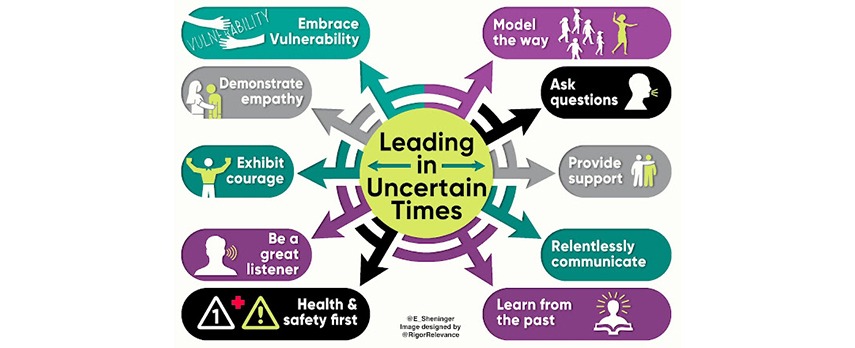
A Principal’s Reflections: Leading in Uncertain Times
From Research to Executive Practice
Although rooted in academic methodology, the manuscript is intended for practical application. It speaks directly to executives, doctoral researchers, entrepreneurs, and institutions looking to strengthen their capacity for strategic decision making.
Celovic places particular emphasis on original research, arguing that leadership development requires more than operational experience. It demands intellectual curiosity, evidence based thinking, and a willingness to challenge existing assumptions.
His broader body of work spans international finance, sustainable development, executive education, and innovation, reflecting a multidisciplinary approach increasingly valued within Europe’s research and business communities.
Readers interested in his previous contributions can explore his profile and earlier publications through The Europe Time network and professional platforms.
Conclusion
As Europe adapts to a new era of economic and technological transformation, Aldin Celovic’s Leadership Cycle offers a timely framework for navigating uncertainty. By combining rigorous analysis with strategic action and reflective observation, his research proposes a model of leadership designed not for stable conditions, but for a world in constant motion.
The message behind the manuscript is clear. Effective leadership in the twenty first century will not belong to those who claim to have all the answers. It will belong to those capable of stepping back, understanding complexity, and guiding institutions through change with clarity, resilience, and vision.
In an age defined by disruption, the leaders who learn to see beyond the immediate horizon may ultimately shape the future of business itself.
Connect with Aldin:
https://www.linkedin.com/in/aldincelovic/
Also Read:-
Manuel Santa Clara Corrêa on AI & Business Transformation
Yasmine BOUDHINA Revolutionizes Healthcare with DossiMed AI
George Simpas from Ioannina-Greece to the Global Market