
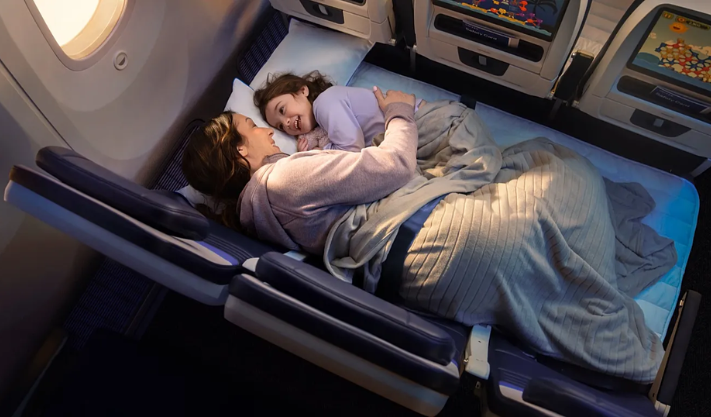
This Airline Unveils Economy Seats That Convert Into Beds
Air travel has long been defined by a clear divide between comfort and cost. For decades, passengers in premium cabins have enjoyed lie-flat beds, spacious seating, and enhanced services, while economy travelers have had to make do with limited legroom and upright seats—especially on long-haul flights. Now, that traditional gap is beginning to narrow. A new innovation in cabin design is reshaping expectations, as airlines introduce economy seats that can convert into beds, promising a more comfortable and accessible flying experience for millions of travelers worldwide.
This development marks a significant shift in how airlines approach passenger comfort. The idea of turning standard economy seating into a sleeping solution is not entirely new, but recent advancements in engineering, materials, and cabin configuration have made it more practical and commercially viable. Airlines are now exploring ways to offer lie-flat or near-flat sleeping options within the economy cabin without drastically increasing ticket prices or reducing overall seat capacity.
A New Era of Comfort in Economy Class
The introduction of convertible economy seating reflects changing consumer expectations. Today’s travelers are more informed and increasingly value comfort, especially on flights that span eight hours or more. Long-haul journeys can be physically exhausting, often leading to fatigue, jet lag, and discomfort. By offering seats that transform into beds, airlines are responding to a growing demand for better in-flight rest without the premium price tag associated with business class.
These new seating concepts typically involve modular designs that allow rows of seats to be reconfigured into flat or semi-flat sleeping surfaces. In some cases, entire rows can be converted into shared sleeping spaces, while in others, individual seats are designed to recline further and extend into a more horizontal position. The goal is to provide passengers with the ability to lie down and sleep more naturally during long flights, significantly improving the overall travel experience.
Balancing Innovation with Practicality
One of the biggest challenges airlines face when introducing such innovations is maintaining efficiency. Economy class cabins are designed to maximize the number of passengers per flight, which directly impacts revenue. Any modification that reduces seat count or increases complexity must be carefully balanced against profitability.
To address this, airlines and manufacturers are developing solutions that are both space-efficient and flexible. Convertible seating systems are often designed to be optional or configurable, allowing airlines to adapt cabin layouts based on demand. For example, certain rows may be designated as “sleep zones” that passengers can book for an additional fee, while the rest of the cabin remains unchanged.
This approach not only preserves capacity but also creates new revenue streams. Passengers who are willing to pay a bit more for added comfort can access these features, while budget-conscious travelers can continue to book standard economy seats. It’s a model that combines accessibility with choice, catering to a wide range of preferences.
Enhancing the Passenger Experience
The impact of convertible economy seating goes beyond physical comfort. Better sleep during flights can lead to improved mood, reduced stress, and enhanced overall well-being. For business travelers, arriving well-rested can make a significant difference in productivity and performance. For leisure travelers, it can mean starting a vacation feeling refreshed rather than fatigued.
Airlines are also integrating these seating innovations with other enhancements, such as improved cabin lighting, noise reduction technologies, and upgraded in-flight entertainment systems. Together, these elements create a more holistic approach to passenger experience, transforming long-haul travel into something more enjoyable and less taxing.
Safety and Design Considerations
Introducing beds into the economy cabin requires careful attention to safety regulations. Aircraft interiors must meet strict standards to ensure passenger protection during turbulence, takeoff, and landing. Engineers must design convertible seating systems that are secure, easy to operate, and compliant with aviation guidelines.
This involves extensive testing and collaboration between airlines, manufacturers, and regulatory authorities. Materials must be lightweight yet durable, mechanisms must be reliable, and configurations must allow for quick transitions between seating and sleeping modes. Despite these challenges, the progress made in recent years demonstrates that such innovations are not only feasible but increasingly practical.
A Competitive Advantage for Airlines
In a highly competitive industry, differentiation is key. Airlines are constantly seeking ways to stand out and attract customers, particularly in the long-haul market. Offering convertible economy seating can serve as a powerful marketing tool, positioning an airline as forward-thinking and customer-focused.
This innovation also aligns with broader trends in the aviation industry, where personalization and flexibility are becoming more important. Passengers are no longer satisfied with one-size-fits-all solutions; they want options that match their needs and preferences. By introducing features that enhance comfort without significantly increasing cost, airlines can build stronger relationships with their customers and encourage loyalty.
Challenges and Limitations
While the concept is promising, it is not without challenges. The cost of developing and installing new seating systems can be substantial, and not all airlines may be willing or able to invest in such upgrades. Additionally, there may be logistical complexities related to booking, cabin management, and maintenance.
There is also the question of scalability. Implementing convertible seating across an entire fleet may take years, and early adopters will need to carefully evaluate performance and customer feedback. However, as technology advances and demand grows, these challenges are likely to diminish over time.
The Future of Economy Travel
The introduction of economy seats that convert into beds represents a broader shift in the aviation industry. It signals a move toward greater inclusivity in comfort, where more passengers can enjoy features that were once reserved for premium cabins. As competition intensifies and innovation continues, the line between economy and business class may become increasingly blurred.
Looking ahead, it is possible that such seating configurations will become standard on long-haul flights. Airlines may continue to refine designs, improve efficiency, and explore new ways to enhance passenger experience. What is clear is that the expectations of travelers are evolving, and the industry is responding with creative solutions.
Conclusion
The unveiling of convertible economy seating marks an exciting development in air travel. By addressing one of the most common pain points of long-haul journeys—lack of comfort—airlines are taking a significant step forward in improving the passenger experience. While challenges remain, the potential benefits for both travelers and airlines are substantial.
As this innovation gains traction, it has the power to redefine what it means to fly economy. No longer limited to upright seats and restless nights, passengers may soon have access to a more restful journey—bringing a new level of comfort to the skies without the premium price tag.
Also Read:
EU-Australia trade deal draws farmer, lawmaker backlash
EU housing crisis: shortages, prices, investmentEU
Air Pollution: Only 13 Safe Countries, Europe