
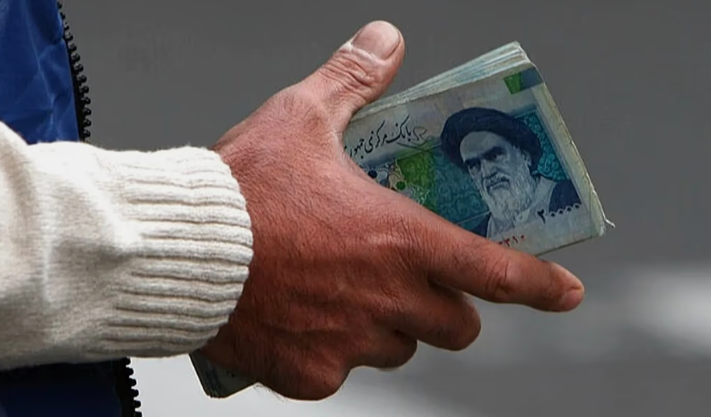
Iran’s Revolutionary Guard Controls the Economy — and the Currency Suffers
In Iran, access to a stable, government-set currency rate is limited to a small, privileged group. Those closest to this benefit are often linked to the powerful Islamic Revolutionary Guard Corps (IRGC). From construction and energy to ports and telecommunications, the IRGC dominates much of Iran’s economy.
The IRGC is not just a military force. It acts as a parallel center of power with a revolutionary and religious mission. Created after the 1979 revolution, it was designed to protect the Islamic foundations of the country and project influence abroad. Over time, its role expanded, especially during the Iran–Iraq war (1980–1988), when it built independent engineering and logistics systems to support the war effort.
Today, Iran faces widespread protests as the rial loses value and prices rise rapidly. The government blames international sanctions, but many Iranians point the finger at their own leadership. Protesters in cities across the country chant slogans against the supreme leader, demanding democracy and equality.
A Long History of Economic Struggle
When the 1979 revolution occurred, one US dollar cost about 70 rials. By early 2026, that same dollar was worth over 1.4 million rials. This means the currency has lost roughly 20,000 times its value in just over 40 years. The decline is due to sanctions, inflation, and diplomatic isolation.
The UN reimposed sanctions on Iran in September 2025 after failing to extend previous relief measures. These sanctions restrict arms trade, target Iran’s missile programs, freeze assets, and impose travel bans. The European Union has similar sanctions, including ones connected to human rights issues and Iran’s supply of drones to Russia.
Even as Iran exports more oil to countries like China and Malaysia, it loses about 20% of potential revenue due to sanctions. Iran must sell oil through indirect routes, using intermediaries, shell companies, and “shadow fleets,” which lowers the price it earns. In the year to March 2025, Iran earned roughly $23 billion from oil exports, but could have earned over $28 billion if it sold directly.
The World Bank says Iran has “lost a decade of economic growth” because of its reliance on oil and sanctions. Between 2011 and 2020, per-capita GDP fell by 0.6% per year. Poverty has risen sharply, with nearly 10 million Iranians falling into poverty during that period. The share of people living below the international poverty line increased from 20% to 28.1%. Even those above the poverty line live precariously: 40% are at risk of falling back into poverty.
The Rise of a Parallel Economy
After the Iran–Iraq war, the IRGC expanded into business. Its main engineering arm, Khatam al-Anbiya, won large government contracts. Today, IRGC-linked companies control oil and gas, infrastructure, ports, transport, telecommunications, mining, and logistics. These projects often bypass competitive bidding and civilian oversight.
This has created a dual economy: a civilian sector regulated by the government and a parallel system controlled by the military. Officials call this a “resistance economy,” designed to survive sanctions. Analysts say it concentrates wealth and power in the hands of IRGC-linked entities while squeezing out private businesses. Ironically, Western sanctions have strengthened this system. As foreign firms left and domestic companies struggled, IRGC-linked businesses were better positioned to operate, benefiting from special access to foreign currency, trade routes, and security protections.
The Guardian Council, which oversees Iran’s political system, supports these economic networks. It shapes laws to protect their interests and ensures loyal candidates are elected to key offices.
Currency Instability as a Structural Problem
In Iran’s current system, access to dollars or import licenses is based on political alignment rather than market forces. This has weakened confidence in the rial. After US sanctions in 2018, the government set a subsidized rate of 42,000 rials per dollar for essential imports. Over time, access was narrowed to a smaller group. In 2022, a new subsidized rate was introduced at 285,000 rials per dollar, while the parallel market rate reached 580,000–630,000 rials.
This gap creates a system where dollars are essentially a government-controlled privilege. Meanwhile, the government often prints more money to cover budget gaps, fueling inflation. People then rush to convert rials into dollars or goods, further devaluing the currency in a self-reinforcing cycle.
The Public Voice: Tehran’s Grand Bazaar
Few places reflect Iran’s economic struggles like Tehran’s Grand Bazaar. Dating back to the 16th century, it is not just a shopping area but a commercial hub connecting merchants, supply chains, and networks. When merchants protest or shut down their shops, it signals deep economic distress. Slogans such as “The merchant may die, but will never accept humiliation!” reflect both public anger and the high stakes for Iran’s economic heart.
In short, Iran’s economy is tightly controlled by the IRGC, creating structural inequalities and contributing to the currency’s collapse. Political favoritism, combined with sanctions and inflation, has left ordinary Iranians struggling, while the state’s parallel economy continues to thrive.
Also Read:
Germany’s Property Prices Surge: Tips for Smart Investors
France Stock Market Update: Top Performing Companies
France Business Outlook 2026: Key Sectors Driving Growth