
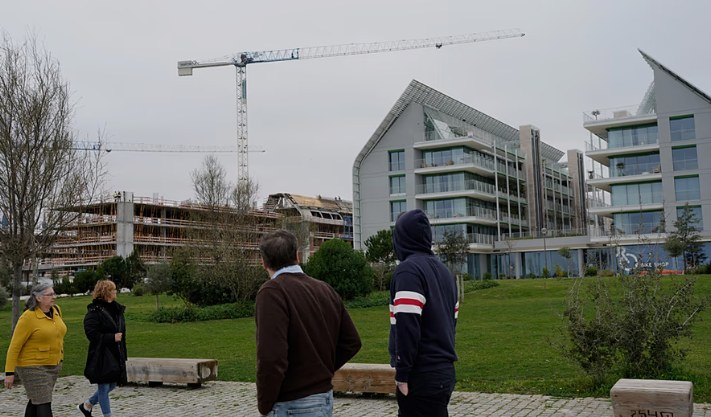
House Prices in Europe: Which Countries Had the Biggest Increases in 2025?
House prices across Europe went up in 2025, but the rise was not the same in every country. Some countries, especially popular tourist destinations like Portugal, Croatia, and Spain, saw much bigger increases than others.
In the last three months of 2025, house prices in the European Union (EU) increased by 5.5% compared to the same period in 2024. While this is a solid rise, several countries saw much higher growth, with prices going up by more than 10%.
Experts say that better financial conditions played a major role in this trend. In particular, changes in interest rates made it easier for people to buy homes again. As borrowing became more stable and predictable, many buyers who had delayed their plans returned to the market.
Better Financing Helped the Market Recover
One of the main reasons for rising house prices in late 2025 was the improvement in financing conditions. Interest rates, which had been rising sharply in previous years, started to stabilize.
Because of this, people who were waiting for the right time to buy a home began searching again. When interest rates are stable, buyers feel more confident because they can better predict their future payments.
Experts also noted that after the interest rate increases in 2023 and 2024, the housing market had slowed down. But by late 2024 and into 2025, things started to improve. Buyers who had been unsure during uncertain times began to feel more comfortable making decisions.
This return of demand pushed house prices higher in many parts of Europe.
Hungary Saw the Highest Price Growth
Hungary recorded the biggest increase in house prices in Europe in the last quarter of 2025. Prices there rose by 21.2% compared to the same period in 2024.
One important reason for this strong growth is government support. Hungary has introduced programs that help people buy homes, especially first-time buyers. These programs increased demand for housing.
At the same time, investors have shown strong interest in the Hungarian property market. This combination of government support and investor activity has pushed prices up quickly.
Strong Growth in Portugal, Croatia, and Spain
Portugal, Croatia, and Spain also saw large increases in house prices. In Portugal, prices rose by 18.9%, while Croatia saw a 16.1% increase. Spain followed with a 12.9% rise.
A key reason for this growth is strong international demand. These countries are popular with foreign buyers, including people looking for second homes, retirees, and digital nomads.
Even though borrowing costs increased in some cases, international buyers continued to invest in these markets. Many people are attracted by the lifestyle, climate, and quality of life in these countries.
The demand is especially high in coastal areas and major cities. For example, cities like Lisbon and Porto in Portugal have seen limited housing supply. When supply is low and demand is high, prices naturally go up.
In Portugal, government policies also played a role. A program that helps young first-time buyers get mortgages with very high financing (up to 100%) made it easier for people to enter the market. The government also guarantees part of the loan, which reduces risk for banks.
Because of this, there are more buyers than available homes in some areas. This has created a “seller’s market,” where sellers have more power to set higher prices.
Tourist Areas Are Driving Growth
Tourist destinations have seen especially strong growth in house prices. In Spain, cities like Valencia and Madrid performed better than the national average.
These areas attract both local and international buyers. Foreign investment remains strong, and many people are buying properties for short-term rentals or as holiday homes.
Experts say that the popularity of these locations continues to push prices higher. The growth of short-term rental platforms has also increased demand for properties in these regions.
Overall, tourist appeal plays a big role in price increases. Coastal areas and cities with strong tourism industries are seeing the biggest rises.
Other Countries with High Growth
Several other European countries also saw strong increases in house prices in 2025.
Slovakia recorded a 12.8% rise, followed by Bulgaria at 12.6%. Latvia saw an 11% increase, while Lithuania had a 10.8% rise. Czechia also recorded a strong increase of 10.4%.
Experts say that Central and Eastern Europe have been among the strongest-performing regions over the past year. These countries are experiencing solid economic growth, which supports higher housing demand.
Investment in infrastructure and increased capital inflows are also helping these markets grow. Many people are moving to these regions for better opportunities, while investors see long-term potential.
Another reason for faster growth in these countries is that housing prices were previously lower compared to Western Europe. As incomes rise, prices are catching up, leading to faster growth rates.
Moderate Growth in Other Countries
Some countries saw house price increases above the EU average but still lower than the top performers.
Denmark recorded a 7.6% increase, while Ireland saw prices rise by 7%. Romania had a 6.7% increase, and the Netherlands saw a 6.2% rise.
Other countries such as Malta (6.1%), Cyprus (6%), Slovenia (5.8%), and Norway (5.7%) also experienced steady growth.
Although these increases are smaller, they still show that housing markets across Europe are generally improving.
Finland Was the Only Country with Falling Prices
Finland was the only country among the 29 European markets where house prices went down in 2025. Prices fell by 3.1% compared to the previous year.
This decline shows that not all markets are recovering at the same speed. Local economic conditions, demand, and supply all affect price trends differently in each country.
Performance of Europe’s Largest Economies
Among the EU’s four largest economies—Spain, Italy, Germany, and France—there were clear differences in performance.
Spain stood out with a strong increase of 12.9%, making it one of the top performers in Europe.
Italy saw a moderate rise of 4.1%, showing steady but slower growth.
Germany recorded a 3% increase. Its housing market has faced challenges due to weak income growth and high costs. In the past, Germany benefited from low interest rates, but changes in the market have made it more difficult for buyers.
France had one of the lowest increases, with house prices rising by just 1%. The French market is still recovering from a sharp slowdown in 2023 and 2024, when high mortgage rates and inflation reduced demand.
Although the market is now stabilizing, buyers remain cautious, and price growth is still limited.
Conclusion
House prices across Europe rose in 2025, supported by better financing conditions and a return of buyer demand. However, the level of growth varied widely between countries.
Tourist destinations and countries with strong international demand, such as Portugal, Croatia, and Spain, saw the biggest increases. Government policies and limited housing supply also played an important role in driving prices higher.
At the same time, Central and Eastern European countries experienced strong growth due to economic development and rising incomes.
On the other hand, some major economies like France and Germany saw slower growth, while Finland was the only country where prices declined.
Overall, the European housing market is recovering, but differences between countries remain significant.
Also Read:-
EU vs U.S. States: Comparing Economic Powerhouses
State reform expands access to healthcare coverage
What could drive markets this week? Key trends