
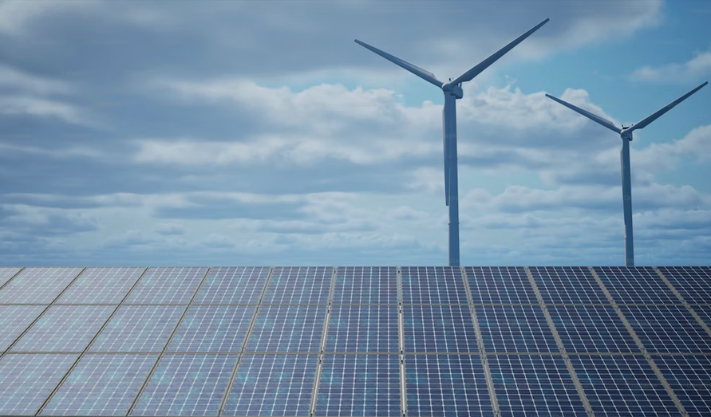
European Investors Eye Renewable Energy Projects
Europe is witnessing a significant surge in investment toward renewable energy projects as governments, businesses, and financial institutions prioritize sustainability and the transition to a low-carbon economy. Rising energy prices, stricter climate policies, and growing public demand for clean energy have created a fertile environment for investors seeking both financial returns and environmental impact. From wind and solar to innovative storage solutions, renewable energy is becoming a key focus for European investment portfolios.
Renewable Energy: A Growing Opportunity
The European Union has committed to ambitious climate goals, including reaching net-zero greenhouse gas emissions by 2050. These targets have accelerated the development of renewable energy infrastructure and provided regulatory incentives for private investment. Solar farms, offshore and onshore wind projects, hydropower, and biomass facilities are attracting capital from pension funds, asset managers, and venture investors.
Renewable energy offers investors stable, long-term returns. Unlike fossil fuels, these projects often benefit from predictable revenue streams through government-backed tariffs, power purchase agreements, or green bonds. This combination of financial security and positive environmental impact makes them increasingly attractive to both traditional and impact-focused investors.
Investment Trends in Europe
Wind and solar energy dominate European renewable investments. Countries like Germany, Spain, and the Netherlands lead in onshore wind and solar capacity, while the UK and France focus on expanding offshore wind projects. Investors are also showing interest in energy storage technologies, such as large-scale batteries and smart grids, which address the intermittency challenges of renewable energy and increase grid reliability.
Private equity and venture capital are increasingly funding innovative energy startups. Companies developing energy-efficient technologies, smart grids, and carbon capture solutions are gaining traction, signaling a shift toward not only generation but also innovation and infrastructure modernization.
Cross-Border Collaboration
European investors are not limiting their focus to domestic markets. Cross-border investments are becoming common, with funds supporting renewable projects in emerging EU markets and beyond. This approach allows investors to diversify risk, access new opportunities, and benefit from economies of scale in project development and technology deployment.
Collaboration between public and private sectors is also driving growth. Governments are providing incentives, subsidies, and regulatory support, while private investors contribute capital, expertise, and operational efficiency. This partnership accelerates project timelines and increases the likelihood of long-term success.
The Road Ahead
Renewable energy is no longer a niche sector in Europe—it is rapidly becoming a mainstream investment focus. Analysts predict continued growth as technology costs decline, regulatory frameworks strengthen, and public demand for sustainability increases. Investors are also paying attention to ESG (Environmental, Social, and Governance) metrics, ensuring that projects deliver both financial returns and measurable environmental benefits.
Challenges remain, including permitting delays, grid capacity limits, and competition for prime locations, but the overall outlook is positive. European investors are positioning themselves strategically to capitalize on a sector that is expected to play a central role in the continent’s energy future.
Conclusion
European investment in renewable energy reflects a powerful shift toward sustainability, long-term growth, and technological innovation. With supportive policies, innovative technologies, and strong market demand, renewable energy projects offer both financial and environmental benefits. As investors increasingly prioritize clean energy, Europe is poised to become a global leader in the transition to a low-carbon economy.
Also Read:
How Compassionate Communication Transforms Healthcare
Top European Cities to Ring in New Year 2026
Germany’s Startups Attract €5B Investment in 2026 Business Boom