
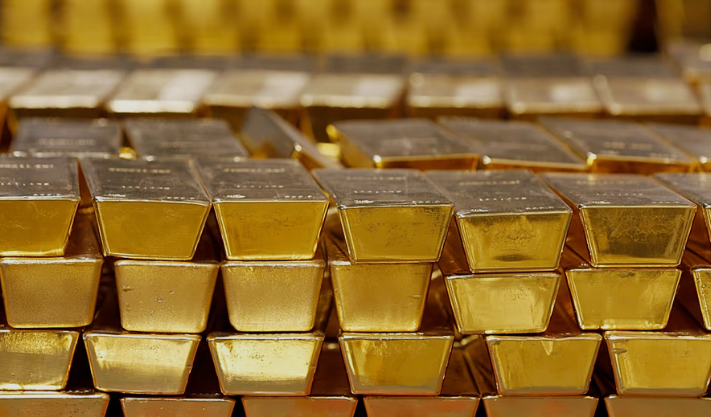
Germany has the world’s second-largest gold reserve. Should it use some of it?
Germany has one of the biggest gold reserves in the world. Some experts now think the country should sell a small part of it to help people and the economy.
The head of the German Institute for Economic Research, Marcel Fratzscher, has suggested this idea. He says Germany’s gold is like a large savings account that could be used in difficult times. Right now, many people are facing higher living costs, so he believes part of the gold could be used to reduce this pressure.
Germany currently holds about 3,350 tonnes of gold. This makes it the second-largest gold reserve in the world, after the United States. Because gold prices have increased a lot in recent years, this reserve is now worth around €440 billion. This is a huge amount of money, and it has started a debate about whether some of it should be used.
Fratzscher argues that even selling a small part of the gold could make a big difference. The money could help lower costs for citizens and businesses. It could also be invested in important areas like education, roads, railways, and digital systems. These investments could help Germany’s economy grow in the future.
His comments come at a time when prices are rising. Many everyday goods and services are becoming more expensive. For example, costs related to driving, such as fuel and maintenance, have increased significantly over the past year. This has made life harder for many households.
Where Germany keeps its gold
Not all of Germany’s gold is stored in one place. A large portion is kept in Germany itself, mainly in the city of Frankfurt. However, a significant amount is stored abroad.
Around one-third of Germany’s gold — about 1,236 tonnes — is held in the Federal Reserve in New York City. Another 404 tonnes are stored in London. Even though the gold is kept in different locations, it is all controlled by the Deutsche Bundesbank.
This system has historical reasons. After the Second World War, Germany had strong exports and earned large trade surpluses. Under the Bretton Woods system, these surpluses were converted into gold. Much of this gold was stored in foreign financial centers like New York and London.
When the Bretton Woods system ended in the 1970s, the gold remained in those locations. Over time, Germany has brought some of it back home. For example, in 2017, the Bundesbank moved 374 tonnes of gold from Banque de France in Paris back to Germany. However, a large share is still kept abroad.
Debate about bringing gold back
The fact that much of Germany’s gold is stored outside the country has led to political debate. Some people believe the gold should be brought back to Germany.
Michael Jäger, from the German Taxpayers’ Association, has said that trust in the United States has decreased in recent years. Because of this, he thinks it may be a good time to return Germany’s gold to its own territory.
In March 2026, the political party Alternative for Germany proposed a plan in the Bundestag. The party called for all of Germany’s gold to be brought back home. It also suggested that the gold could be used in the future to support a new national currency, instead of the euro.
This idea was strongly criticized by other political parties. Many lawmakers said the proposal was unrealistic and unnecessary.
For example, Mechthilde Wittmann from the CSU party called it a “comic motion.” She warned against making decisions about gold based on fear or political slogans.
Philipp Rottwilm from the SPD party defended keeping gold in New York. He said that storing gold abroad gives Germany more flexibility in international markets.
Sebastian Schäfer from the Green Party also rejected the idea. He said the debate was not serious and stressed that Germany’s gold is safe in the United States.
Meanwhile, Doris Achelwilm from the Left Party raised a different question. She suggested that Germany should at least consider selling some of its gold, similar to what Fratzscher proposed. This idea is now being discussed further in the parliament’s finance committee.
Should Germany sell its gold?
The Deutsche Bundesbank has so far refused to sell any of its gold. The bank believes that gold is an important long-term asset. It helps maintain trust in the country’s financial system and currency.
Gold is often seen as a safe investment, especially during times of crisis. For this reason, central banks usually keep their gold reserves instead of selling them. The Bundesbank also trusts the Federal Reserve to safely store Germany’s gold abroad.
However, Fratzscher believes that the situation should be reconsidered. He is not suggesting selling all the gold, but only a small portion. According to him, it does not make sense to completely rule out using such a large resource when the country is facing economic challenges.
At the same time, he admits that selling gold is not a simple decision. Even the German government cannot force the Bundesbank to sell its reserves. The central bank operates independently and makes its own decisions.
A balance between safety and need
The debate about Germany’s gold shows a larger issue: how to balance long-term security with short-term needs. On one hand, keeping gold provides stability and confidence. On the other hand, using some of it could help solve current economic problems.
Supporters of selling gold argue that the money could improve infrastructure, education, and public services. This could strengthen the economy in the long run.
Opponents worry that selling gold could weaken financial stability. They believe the reserves should only be used in extreme emergencies.
For now, no final decision has been made. The Bundesbank continues to hold its gold, and the political debate is ongoing.
Conclusion
Germany’s gold reserve is a valuable national asset. With its value now at around €440 billion, it has become the focus of an important discussion.
Some experts, like Marcel Fratzscher, believe that part of this wealth should be used to support the economy and reduce the burden on citizens. Others argue that the gold should remain untouched to ensure long-term stability.
As economic pressures continue, this debate is likely to grow. Whether Germany decides to keep its gold or use some of it, the choice will have a major impact on the country’s financial future.
Also Read:-
How Watching Trends and News Can Improve Your Job Search
Meta cuts 8,000 jobs to fund AI, Microsoft next
2026 Wealth Rankings: France, Germany Drop Out Top 10