
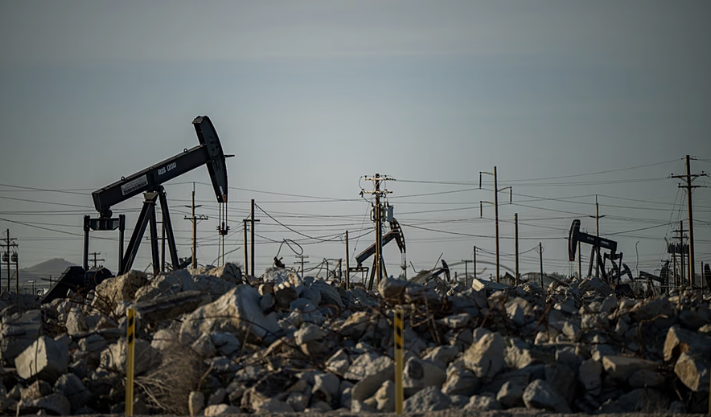
Oil Prices Rise to $110 After Israel Attacks Iran’s Energy Sites
Oil prices went up sharply and reached $110 per barrel after Israel carried out attacks on important energy facilities in Iran. The attack targeted part of Iran’s largest gas field and another oil facility. After this, Iran’s Islamic Revolutionary Guard Corps (IRGC) warned that some energy sites in the Gulf region could now be seen as “legitimate targets.”
On Wednesday afternoon, Brent crude oil prices climbed to $110 per barrel. This increase happened after Iranian state media reported that Israel had hit parts of the South Pars gas field, which is the biggest gas plant in Iran. Another location that was attacked is the Asaluyeh oil facility, which is also very important for Iran’s energy production.
At the same time, the US oil benchmark, known as West Texas Intermediate (WTI), also went up in price. It reached about $98 per barrel during the same period.
These attacks have increased fears that the conflict in the Middle East could become bigger and last longer. When such conflicts affect oil and gas facilities, it can reduce supply and create problems in global energy markets. Because of this, oil prices are rising again.
The situation has made investors worried about further damage to energy infrastructure. If more oil facilities are destroyed or stopped from working, it could reduce the amount of oil available worldwide. This would push prices even higher and affect economies across the globe.
Interestingly, oil prices are rising even though there is some positive news that would normally lower prices.
For example, Saudi Arabia announced on Wednesday that its largest oil refinery, Ras Tanura, had restarted operations on March 13. This refinery is one of the most important oil processing sites in the world, and its restart should help increase oil supply.
In another development, the US government announced a temporary change to a law called the Jones Act. This law usually restricts the transport of goods between US ports to ships that are built, owned, and operated by Americans.
The Trump administration has now given a 60-day waiver, which means foreign ships can also transport goods like oil, gas, and fertilizers between US ports. This move is expected to make transportation cheaper and easier in the short term.
However, despite these positive steps, oil prices are still rising. The main reason is the growing tension in the Middle East and the risk of more attacks on energy facilities. These risks are stronger than the factors that would normally help control prices.
The White House Press Secretary, Karoline Leavitt, confirmed the decision to allow this 60-day waiver of the Jones Act. She explained that this step is meant to reduce short-term problems in the oil market.
In a post on social media platform X, she said that the decision is part of efforts to handle disruptions while the US military continues its operations, referred to as “Operation Epic Fury.”
This is not the first time such a waiver has been used. The last time was in October 2022, when it was applied to help a tanker deliver fuel to Puerto Rico after Hurricane Fiona.
Before that, in 2021, the Biden administration also eased the law temporarily. This happened after a cyberattack shut down a major fuel pipeline on the US East Coast, creating supply issues.
Meanwhile, US President Donald Trump is also focusing on the Strait of Hormuz, a very important route for global oil shipments. He has again asked allied countries to help protect this area by joining a naval escort mission.
The Strait of Hormuz is used by many countries to transport oil, making it a key point for global energy supply. Any disruption in this area can have a big impact on oil prices and availability.
In a post on Truth Social, President Trump said that many allied countries depend on this route, while the US depends on it less. He warned that if allies do not help now, they might have to manage the situation on their own after the conflict ends.
So far, no country has made a clear commitment to join the mission. However, a report by the Wall Street Journal on Monday suggested that the White House may soon announce that several countries have agreed to participate.
The report also said that officials are still deciding whether the naval mission should start during the conflict or after it ends.
In Europe, foreign ministers from the European Union recently met in Brussels to discuss the situation. They talked about possibly expanding their current naval mission, called Aspides, to include the Strait of Hormuz.
However, after discussions, EU countries decided not to take part in the mission at this time.
Overall, the situation remains uncertain and tense. The attacks on Iran’s energy facilities have increased fears of a wider conflict in the Middle East. This has led to rising oil prices, despite efforts to stabilize the market.
If the conflict continues or becomes worse, it could further damage energy infrastructure and disrupt global oil supply. This would likely push prices even higher and affect many countries that depend on oil imports.
For now, markets are closely watching developments in the region, especially any new attacks or political decisions. These events will play a key role in determining the future direction of oil prices.
Also Read:
Germany Petrol Costs Higher Than EU Average
Why Your Business Feels Like It’s Fighting Itself (And How to Fix It)
Real GDP Growth in Europe: Which Countries Grew the Most in 2025?