
Iran’s Strikes on Gulf Energy Sites Shake Markets and Raise Recession Fears
Iran’s recent strikes across the Gulf region and in Azerbaijan have created serious concerns for global energy supplies. The attacks, along with Iran’s control over the important Strait of Hormuz, are putting pressure on the world’s energy markets. Experts say the situation could have major economic consequences if the conflict continues.
Before the war began one week ago, the United States and Israel increased their military presence in the region. During that time, Iran repeatedly warned that it would respond strongly if it was attacked. Iranian officials said any conflict would spread instability across the Middle East and possibly affect the wider world.
Now, only a week after the war started, those warnings appear to be turning into reality. Iran has launched several waves of attacks that have caused major disruption in global energy markets.
Since the conflict began last Saturday, Iran has continued its aerial attacks across the Gulf region. On Thursday, the situation expanded further when Iranian forces also targeted Azerbaijan.
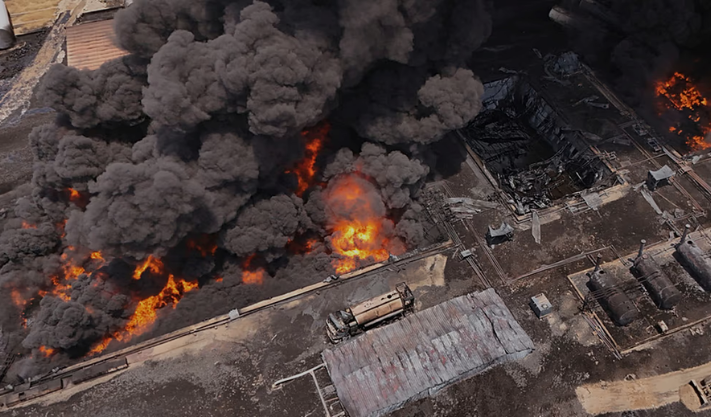
Iran has said its attacks are focused on American and Israeli interests. However, reports from the region suggest that many of the missiles and drones have also struck key energy facilities in Gulf countries. These facilities are critical because they supply oil and gas to many of the world’s largest economies.
Another major concern is Iran’s actions around the Strait of Hormuz. This narrow waterway is one of the most important oil routes in the world. About 20 percent of global oil shipments pass through it every day. Reports from shipping and trade service Lloyd’s List say that more than 200 ships are currently stranded because of disruptions in the area.
The conflict has also affected natural gas production. Qatar temporarily stopped operations at the world’s largest liquefied natural gas (LNG) facility after Iranian drones targeted industrial areas in Mesaieed and Ras Laffan Industrial City. The attack created shock in global energy markets and caused prices to rise quickly.
Qatar is a key supplier of LNG, producing around 20 percent of the world’s total supply. Its gas exports play an important role in meeting energy demand in Asia and Europe. Any disruption to Qatar’s production can therefore affect global energy prices and supply.
The attacks did not stop there. Another wave of Iranian strikes forced Saudi Arabia’s largest oil refinery to shut down temporarily. Oil production in Iraq has also been affected, while Israeli gas fields have faced disruptions as well. In addition, Dubai’s major ports, which are among the busiest in the world, have reportedly been impacted by the growing conflict.
In an assessment released on Friday, the UK Foreign Office said that Iranian attacks are now happening less frequently than during the first days of the war. However, officials noted that the range of targets is expanding. More attacks are now aimed at economic and energy infrastructure rather than only military locations.
Energy experts warn that the longer the conflict continues, the greater the risk to the global economy.
In an interview with the Financial Times, Qatar’s Energy Minister Saad al-Kaabi warned that the war could seriously damage economies around the world.
He said that if the conflict continues for several weeks, global economic growth will suffer. Energy prices would likely rise everywhere, and shortages of some products could occur. According to him, supply chain disruptions could also cause factories to slow down or stop production.
Much of the concern centers on the Strait of Hormuz. Dr. Yousef Alshammari, president of the London College of Energy Economics, said that a full blockade of the strait could push the world into a recession.
He explained that as the summer approaches, the risks to the global economy could increase. If oil shipments through the strait remain blocked for a long period, energy prices could rise sharply and affect economic growth worldwide.
Alshammari also said that China may eventually put political pressure on Iran. China is one of the biggest buyers of Iranian oil, and it depends heavily on stable energy supplies.
According to him, China is unlikely to stay silent if the situation continues to threaten global oil flows. The best outcome would be a reopening of the Strait of Hormuz and a return to normal shipping activity.
He also noted that natural gas prices have already risen by more than 50 percent in some markets, especially in Europe. However, oil prices have not increased as much as many analysts expected.
Alshammari said this is partly because global demand for oil is currently relatively low. In addition, oil markets are still well supplied for the moment, which has helped limit price increases.
Some analysts are also questioning the logic behind Iran’s choice of targets.
Matthew Bryza, a former US ambassador to Azerbaijan, said that Iran’s attacks on Azerbaijan, Turkey, and Cyprus do not appear to follow a clear military strategy.
He said it is difficult to understand why Iran would attack Azerbaijan’s Nakhchivan region, since Iran likely does not want Azerbaijan to become directly involved in the conflict.
Bryza also pointed out that Azerbaijan’s President Ilham Aliyev had recently shown support for Iran. According to him, Aliyev was the only world leader who visited an Iranian embassy to express condolences after attacks killed Iran’s supreme leader and several senior officials.
Bryza added that Iran had even asked Azerbaijan for help evacuating its citizens from Beirut. Azerbaijan reportedly sent a plane to assist and did not charge Iran for the help.
Because of this, Bryza said Iran’s attack on Azerbaijan soon afterward was surprising and difficult to explain.
He suggested that Iran might be trying to create economic pressure that could influence US politics. Rising oil prices and supply chain problems could affect American voters and possibly weaken support for US pressure on Iran.
However, Bryza believes a more likely explanation is that different Iranian military commanders are making independent decisions. After the deaths of several senior leaders, Iran’s supreme leader reportedly ordered lower-level commanders to take greater control of military operations.
As a result, some attacks may be happening without a clear overall strategy.
Bryza concluded that individual commanders may believe their actions make sense from their perspective, even if those decisions do not fit into a broader military plan.
Also Read:
Experts Warn the Euro Could Fall if the Iran War Continues
5 common mistakes owners make when selling a business
SOCAR Gets EU Approval to Buy Major Italian Fuel Company