
Four Years Later: The Heavy Economic Cost of Russia’s War in Ukraine
It has been four years since Russia launched its full-scale invasion of Ukraine on 24 February 2022. What began as a fast-moving military attack has turned into a long and exhausting war. While the world often focuses on the human suffering and the loss of land, the economic damage caused by the war is just as serious. The conflict has put extreme financial pressure not only on Ukraine, but also on its international partners.
Ukraine now faces two huge challenges at the same time. First, it must pay for its daily defence against Russian forces. Second, it must prepare to rebuild the country after massive destruction. This rebuilding effort is expected to become the most expensive reconstruction project in modern European history.
The cost of defending the country is enormous. For the past four years, Ukraine has needed a constant and large flow of money to support its army. According to Andriy Hnatov, head of the general staff of the Armed Forces of Ukraine, one single day of full-scale war in 2025 costs the country about $172 million (around €145.7 million).
This is a sharp rise compared to 2024, when the average daily cost was around $140 million (about €118.5 million). That means the daily expense of the war has increased by almost 23% in just one year. These figures show how the war is becoming more expensive over time.
Each month, Ukraine now needs about $5 billion (around €4.2 billion) to keep its military operating. This money is used to pay soldiers, buy ammunition, repair equipment, and invest in new combat technologies. The scale of spending is extraordinary.
To meet these needs, Ukraine is spending more than 30% of its Gross Domestic Product (GDP) on its military budget. In comparison, most European countries during peacetime have struggled to meet the basic NATO target of 2% of GDP for defence. Ukraine’s situation is completely different. Its economy is operating fully on a wartime basis.
This level of military spending places huge pressure on the national economy. Government resources are stretched to their limits. Lieutenant General Hnatov has clearly warned that Ukraine cannot carry this financial burden alone. Continued support from Western countries is essential. Without financial aid from international partners, Ukraine risks economic collapse.
As domestic reserves run low, financial exhaustion is becoming a key factor in the war. It is no longer only about military strength on the battlefield. It is also about which side can afford to continue the fight.
At the same time, Ukraine must think about the future. Even while fighting continues, the country is looking ahead to the massive task of rebuilding. Just before the fourth anniversary of the invasion, the Government of Ukraine, the World Bank, the European Commission, and the United Nations released their latest joint Rapid Damage and Needs Assessment (RDNA5).
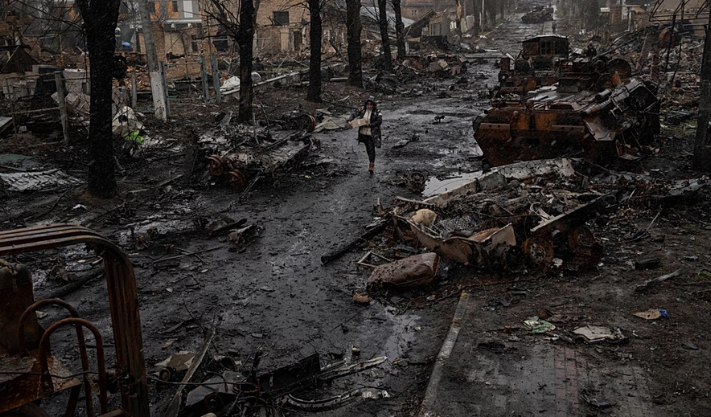
The results were shocking. As of December 2025, the total estimated cost of reconstruction and recovery over the next ten years is nearly $588 billion (around €500 billion). This amount is almost three times Ukraine’s projected nominal GDP for last year. It highlights the scale of destruction caused by the war.
Direct physical damage alone has passed $195 billion (about €165 billion). The worst damage is in frontline regions and major cities. Homes, roads, bridges, and especially energy infrastructure have been heavily targeted.
The report shows that damage to energy assets increased by 21% over the past year. This was largely due to intensified Russian strikes during a very cold winter. Attacks on power plants and energy facilities have made life even harder for civilians.
Housing has also been severely affected. Around 14% of all homes in Ukraine have been damaged or destroyed. More than three million households have been displaced or directly impacted. Families have lost not only their homes but also their sense of safety and stability.
Despite these enormous challenges, Ukrainian leaders continue to express determination. Prime Minister Yulia Svyrydenko said that even with unprecedented attacks on energy systems and homes, the Ukrainian people remain strong. Businesses are still operating, and recovery efforts are moving forward wherever possible.
International partners are already planning for the long-term rebuilding of the country. The goal is not just to repair what was damaged, but to transform Ukraine into a modern European state. Major institutions believe that reconstruction should also include reforms and modernization.
The private sector will play an important role in raising both domestic and international investment. Marta Kos, the European Union’s Commissioner for Enlargement, reaffirmed the EU’s commitment to helping Ukraine rebuild. She said that the destruction caused by Russia’s war is unlike anything seen in generations. However, she emphasized that the European Union plans to support Ukraine in becoming a strong and modern EU country.
As the war enters its fifth year, the struggle is not only happening on the battlefield in eastern Ukraine. It is also taking place in government budgets and international financial systems.
For Ukraine, achieving victory will require two things. First, it must continue to manage the heavy daily costs of defending itself. Second, it must secure the huge half-trillion-dollar investment needed to rebuild the country for the future.
The economic toll of the war is staggering. Yet Ukraine’s determination to survive, defend itself, and rebuild shows that the fight is about more than territory. It is also about economic survival, national resilience, and the hope of creating a stronger nation after years of devastation.
Also Read:
Why The Ouze’s Jewelry Business Is Booming
8 Go-To-Market Strategies for Web3 Business Leaders
EU Steel Exports to US Fall 30% as Tariff Talks Remain Stuck