
‘Made in Europe’ Plan Sparks Strong Lobbying in Brussels
The European Union’s new “Made in Europe” plan is facing strong pressure and lobbying from many sides. Both EU member countries and foreign partners are trying to influence the proposal. The plan has already been delayed once, and now it may be postponed again.
The European Commission wants to introduce what it calls a “European preference” in public procurement. This means that products made in Europe would be given priority in public contracts and government support programs. The goal is to help European companies compete better with businesses from countries like China and the United States.
However, the proposal has created debate across Europe. Some critics say it looks like protectionism. They worry that it could close the EU market and limit trade with other countries. Several EU member states are also concerned about how “made in Europe” will be defined. They want the definition to remain flexible so that close partner countries can still take part in EU projects and contracts.
At the center of the debate is the new Industrial Accelerator Act (IAA). This law would officially define what “made in Europe” means. According to EU officials, the proposal was expected to be presented on 26 February, but it may face another delay. It was already postponed once in November 2025.
A leaked draft of the Industrial Accelerator Act, reported by Euronews, shows that the plan focuses on key strategic sectors. These include chemicals, automotive, artificial intelligence, and space industries. The draft also suggests clear thresholds for how much of a product must come from the EU to qualify as “European.”
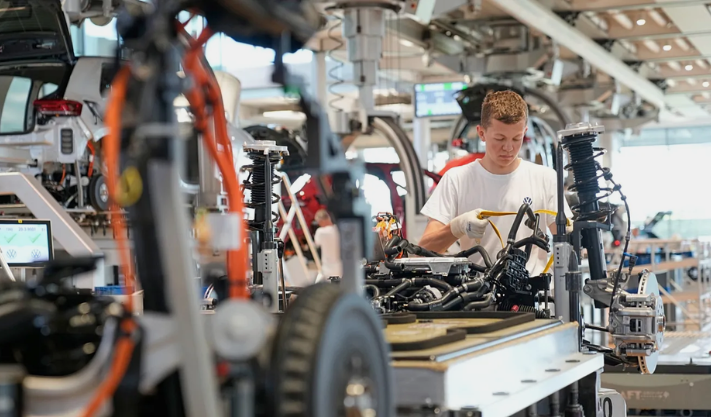
For example, electric vehicles (EVs) would need 70% EU-origin content. Aluminium would need 25% EU content. Plastics used in windows and doors would require 30% EU origin. These thresholds are meant to strengthen European supply chains and reduce dependence on foreign countries.
But not all member states agree with this approach. Nordic and Baltic countries have raised concerns that strict rules could reduce foreign investment in Europe. They fear that companies might avoid investing in the EU if the rules become too restrictive. They also worry that European businesses could lose access to important new technologies from outside the EU.
In another leaked document reported by Euronews, the European Commission appeared to move closer to Germany’s position on the issue. Germany supports a European preference, but one that remains open to “like-minded” countries. These would be countries that have similar values and trade agreements with the EU. Under this approach, countries that offer fair access to their public contracts and support EU economic goals could still benefit.
The United Kingdom is one of the countries watching the situation closely. British officials have expressed concern about possible protectionist measures. They say that the UK and EU economies are deeply connected and that new trade barriers could harm both sides.
One UK official told Euronews that this is “not the moment to mess with what is already working.” Trade between the EU and the UK remains very strong. The EU is the largest export market for British cars. At the same time, many European car manufacturers produce vehicles in the UK. In 2024, the UK was the EU’s second-largest export destination after the United States.
UK Chancellor Rachel Reeves recently said that almost half of Britain’s trade is with the European Union. She explained that the UK trades almost as much with the EU as with the rest of the world combined. British officials also argue that London’s large capital markets could help the EU attract investment and support its industrial growth. However, they warn that this cooperation could suffer if the EU closes its market.
Inside the European Commission, discussions are still ongoing. The Commission wants to present a proposal before the March EU summit, which will focus on competitiveness. But there is also internal resistance. The Trade Directorate-General, which traditionally supports open markets and free trade, has reportedly expressed concerns about moving too far toward protectionism.
France has long supported the idea of a strong “Made in Europe” strategy. Paris believes that the idea now has enough support in Brussels to become reality. French officials say the main discussion is no longer about whether to adopt the policy, but how to implement it.
EU industry chief Stéphane Séjourné, who is leading the project, recently said that introducing a European preference would represent a major change in the EU’s economic policy. He acknowledged that such a change takes time and effort to reach a balanced and smart solution.
As debates continue, the future of the “Made in Europe” plan remains uncertain. The European Commission must now find a compromise that supports European industry while keeping the EU open to trusted partners. The coming weeks will show whether the proposal moves forward or faces another delay.
Also Read:
Silent wealth loss in Europe: Is your money at risk?
Analysis: Big Tech AI Spending and Europe’s Data Power
France Loses One in Three Car Manufacturing Jobs in 13 Years