
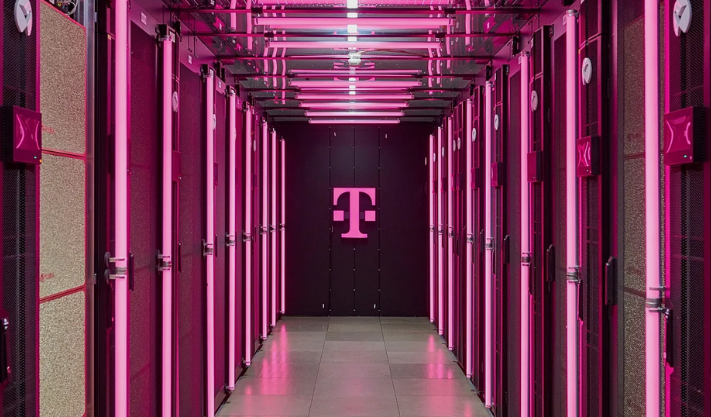
Germany opens its first AI factory to strengthen Europe’s digital independence
Germany has opened its first large artificial intelligence (AI) factory as part of a wider effort by the European Union to become more independent in digital technology. The new project aims to reduce Europe’s reliance on foreign technology providers and build strong AI systems inside the EU.
As Europe works to create its own AI infrastructure, one of the biggest AI computing centres on the continent has now opened in Munich. Germany hopes this new facility will help both the country and the European Union play a leading role in what is known as “sovereign AI” — AI that is built, controlled, and managed within Europe.
The project is called the Industrial AI Cloud. It was developed by Deutsche Telekom in partnership with technology company NVIDIA and data centre partner Polarise. The AI factory was officially unveiled in Munich on Wednesday, after about six months of construction work.
The main goal of the Industrial AI Cloud is to provide powerful AI computing services to businesses, researchers, and public organisations. At the same time, it ensures that all data and operations stay under German and European laws. This is important for data security and privacy, which are key concerns across Europe.
Tim Höttges, CEO of Deutsche Telekom, said the project proves that Europe can succeed in AI technology. He explained that the company is investing in AI, in Germany as a business hub, and in Europe as a whole. According to him, the AI factory shows that Europe is capable of building advanced AI systems on its own.
The AI factory is powered by nearly 10,000 NVIDIA Blackwell graphics processing units (GPUs). These powerful chips allow the system to deliver up to 0.5 exaFLOPS of computing power. Telekom says this is strong enough for all 450 million people in the EU to use an AI assistant at the same time.
One of the most important features of the Industrial AI Cloud is that it follows strict German and EU data protection laws. All data is handled within Europe and remains under European control. This supports what European leaders call digital sovereignty, which means having full control over digital infrastructure, data, and technology without depending on non-European providers.
Germany’s Vice Chancellor and Finance Minister, Lars Klingbeil, said the project shows how private investment and political goals are working together. He stressed that technological leadership must play a central role in Germany’s future economy. He also said the AI factory strengthens Europe’s digital independence.
The project also supports the so-called “Deutschland stack”, which was developed together with software company SAP. This system combines cloud services, business software, and AI tools into one platform. It is designed to help companies and public organisations use AI more easily and securely.
Industrial applications are a major focus of the AI factory. German technology company Siemens is already using the platform. Siemens is integrating parts of its SIMCenter simulation software into the AI Cloud. This allows companies to run complex simulations much faster than before.
So far, around 10 companies are already part of the new AI system. Siemens executive Cedrik Neike said the new setup greatly reduces the time needed for simulations. He explained that this is not a future promise but something that is already working today.
Another key goal of the Industrial AI Cloud is sustainability. The facility runs entirely on renewable energy, helping to reduce its carbon footprint. It also uses river water for cooling, which lowers energy use. In addition, the waste heat produced by the data centre will be sent back to help heat nearby areas in Munich.
The Industrial AI Cloud is now open to a wide range of users. These include large companies, startups, research institutions, and public authorities. By offering powerful and secure AI computing within Europe, the project aims to support innovation, protect data, and strengthen Europe’s position in the global AI race.
Overall, Germany’s first AI factory marks an important step toward building a strong and independent European digital future.
Also Read:
Novo Nordisk Shares Fall 17% After Weak 2026 Outlook
UK Business Leaders Predict Economic Trends for 2026
UK Lifestyle & Beauty Startups Making Waves in 2026